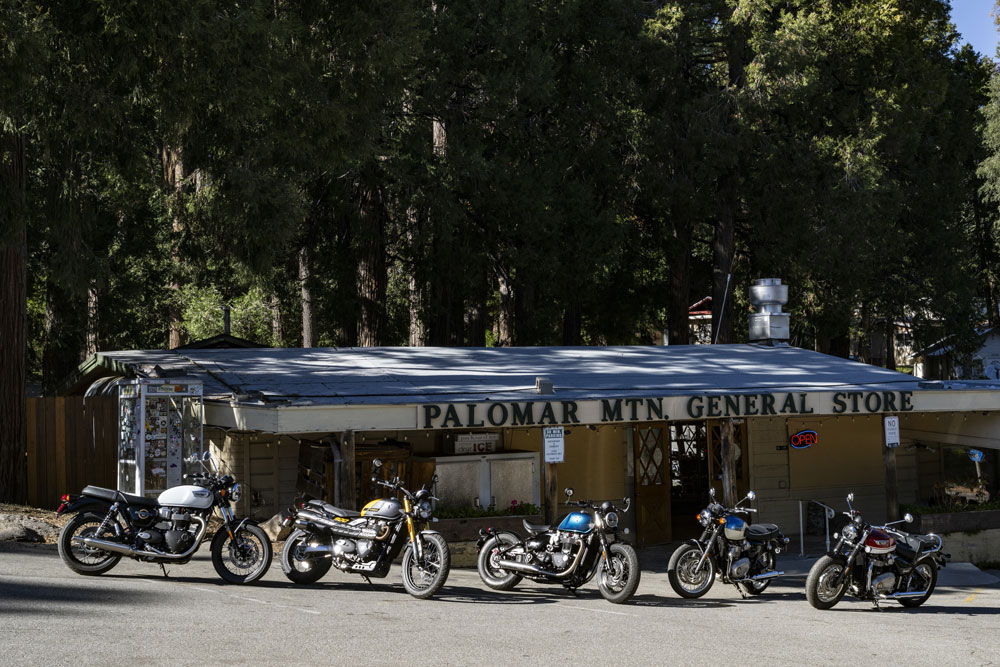
The Bonneville, with five models, is the most important member of the Triumph family, and we recently got to go for a spin on all of them.
One must give credit where credit is due.
Triumph’s Bonneville is one of the longest-running motor vehicles of any format, having first seen the light of day way back in late 1958, when the T120 was shown to the motorcycling public at the Earls Court Bike Show and named after the Bonneville Salt Flats, where Triumph set land-speed records.
Those heady days of land-speed-record chases are long in the rearview mirror, Triumph instead having perfectly crafted the Bonneville into everything from a rogue outlaw’s ride in the seminal film The Wild One, to Steve McQueen’s famous fence jump on a TR6 in The Great Escape, to being the ultimate in modern-retro coolness under first the new owner, John Bloor, and now his son, Nick.
As time has gone on, the Bonnie range has swelled somewhat to five: the arrogant-looking Bobber, classy Speedmaster, Scrambler 1200, T100 and two of the big daddy 120s in the base and Black editions.
For 2026, Triumph hasn’t reinvented the Bonneville brand but has given each model subtle improvements, namely in rider aids and ergonomics, and as part of Triumph’s biggest ever international press launch held in Southern California at the end of 2025, we got a chance to throw a leg over each of them.
2026 Triumph Bonneville Bobber
The $14,795 Bobber leans hard into that minimalist, single-seat style that was pioneered by returning servicemen after the Second World War, but this one is far more usable than those our predecessors rode.
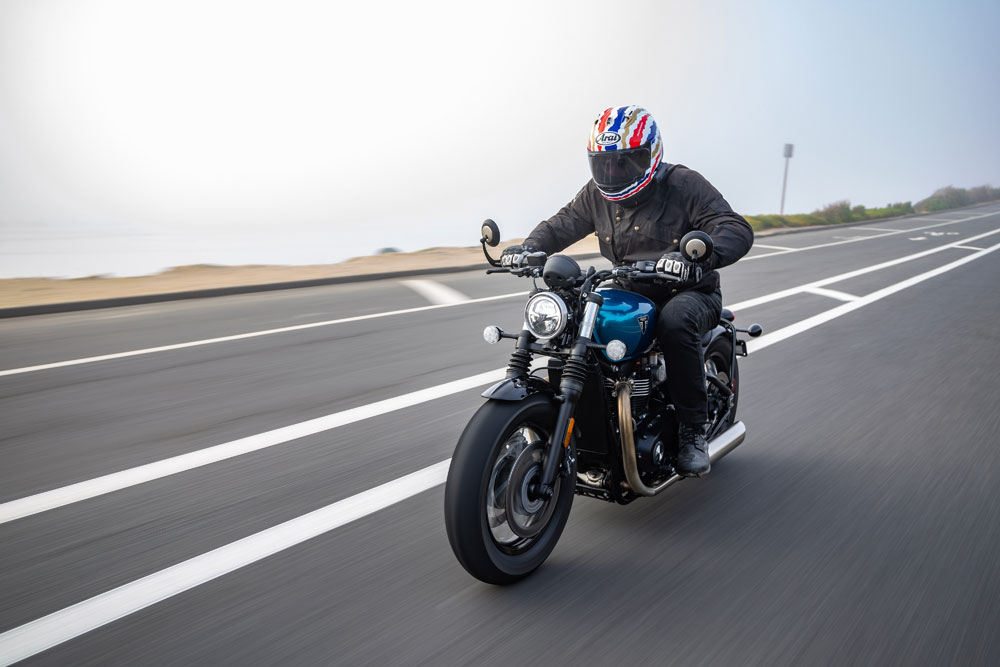
Powered by Triumph’s 1200cc parallel-twin (the same as the Speedmaster and T120), it delivers huge amounts of low-range performance and a satisfying pulse that suits the Bobber’s laidback attitude. On the road, the 2026 Bonneville Bobber feels more complete than before—still a style statement, but now a more convincing everyday motorcycle.
One of the most welcome changes is the larger 3.7-gallon gas tank, one that has steadily grown since the model’s introduction back in 2017. That extra capacity translates into more miles between stops, although just how far you’ll go is up to how much punishment your spine can take, as it’s not the most comfortable bike in Triumph’s lineup.
However, comfort has also been improved on the 2026 model. The floating solo seat has been reworked with more padding and a wider base, making longer rides less punishing than earlier versions, and the handlebar is now a single-piece unit compared to the clip-ons of the last generation.
The suspension remains on the firm side, as expected for a bobber, but the balance feels improved, helped in part by new lightweight wheels that sharpen steering response and reduce effort when tipping into corners.
Here’s the most surprising aspect of the ’26 Bobber. It’ll hustle through backroad bends with more gusto than you’d expect, but it takes a certain coercion to make it happen. You’ll sit extremely low in the chassis (seat height is a tiny 26.9 inches), and if you don’t get your weight off the seat in corners to help it turn when riding briskly, you’ll ground things like footpegs real quick, but its bulldog stance can still help you get around corners far quicker than you’d think.
Twin brakes up front give twice the power of the previous generation’s single disc and caliper setup, and cornering-sensitive ABS and traction control give you an extra safety net. You also get full LED lighting and practical touches such as cruise control and a USB-C charging port, features that feel right at home on a modern classic.
The Bobber is the most extreme of the Bonneville range and certainly isn’t for everyone. Despite the improvements, I wouldn’t call it a comfortable machine for more than half an hour at a time, but I have long legs that don’t like low seat heights. If you’re a little shorter than my 6-foot-1 and 33-inch inseam, you might find a willing partner in the Bobber.
However, in terms of legit cool style, there’s pretty much nothing in the Triumph catalog, let alone the Bonneville sub-name, that can touch the Bobber.
2026 Triumph Bonneville Bobber | What’s to like?
- New ergos
- Lighter wheels
- Unmistakable style
2026 Triumph Bonneville Speedmaster
It’s a little hard to believe the Speedmaster is 23 years old, having first seen the light of day back in 2003.
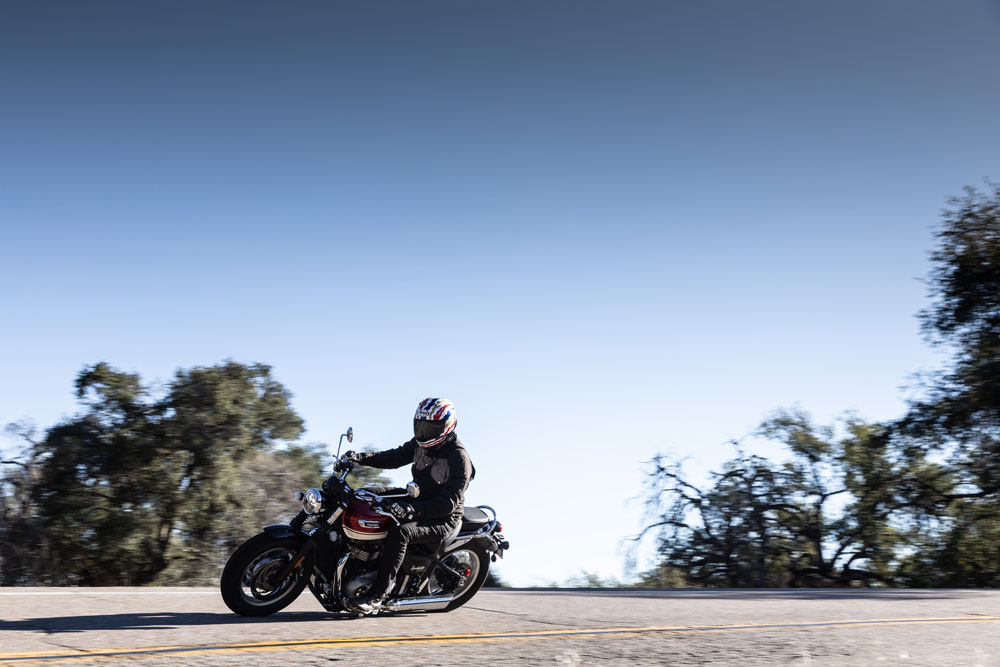
The $14,795 Speedmaster has always lived at that middle point, classic British style mixed with a dose of American cruiser ergonomics, but it’s not a model I’ve been immediately drawn to, as I’m not exactly sure what the bike is supposed to be.
The Speedmaster’s low, flowing profile remains instantly recognizable, but, like the Bobber, you’ll see a revised fuel tank that now holds more gas and adds visual substance to the bike’s midsection. The added capacity brings a useful increase in riding range, making the Speedmaster better suited to longer days without frequent fuel stops. New paint options and detail finishes further modernize the look while staying true to the Bonneville lineage.
Comfort has been a clear priority for 2026. The seat has been reshaped and offers more support for both rider and passenger, while changes to the handlebar position result in a more natural reach. The riding posture is relaxed but not overly reclined, but for me, the curvature of the seat and the forward foot controls put excess pressure on my lower back in much the same way as a traditional cruiser seat on a Harley-Davidson cruiser would. Hence, I found the Speedmaster the least comfortable bike on test, which was a surprise, I’ll grant you.
Like the Bobber, new lightweight wheels reduce unsprung mass, giving the Speedmaster a lighter feel during turn-in and making it more responsive through long, sweeping corners. It’s still no canyon carver, but its mid-corner stability is excellent, and the bike tracks predictably even when the pace picks up, to a point. This is not a bike for riding quickly, but more one for taking it easy and checking out the views.
To that end, the suspension tuning favors comfort, soaking up imperfect pavement without excessive wallow, which creeps in quickly if you get too greedy with your sports-riding ambitions.
The 1200cc parallel-twin engine carries over, and it’s genuinely difficult to fault. With its broad torque spread and distinctive 270-degree firing order, the motor delivers strong pull from low rpm and a smooth, unhurried character that suits the Speedmaster’s demeanor. The throttle response is clean and manageable, making the bike easy to ride in traffic or at a steady cruise. The exhaust note adds just enough personality without becoming intrusive, and it looks superb with the muffler finishing almost in line with the rear axle.
Technology has taken a step forward, with lean-sensitive ABS and traction control now operating quietly in the background, and there are multiple ride modes to adjust throttle response. Standard cruise control and a USB-C charging port improve everyday usability. LED lighting rounds out the updates, improving visibility while maintaining a classic aesthetic.
The ergos didn’t suit the kind of bike I like to ride, but that’s a personal trait. There’s no denying the Speedmaster has a stately look, similar to what we saw from Triumph half a century ago. It’s not my jam, but I can appreciate it all the same.
2026 Triumph Bonneville Speedmaster | What’s to like?
- Relaxed ride position
- New ride modes and safety features
- A nice mix of British and American retro style
2026 Triumph Scrambler 900
One can’t look at a Scrambler 900 and not want to get on one, turn left, and take off to the middle of nowhere.
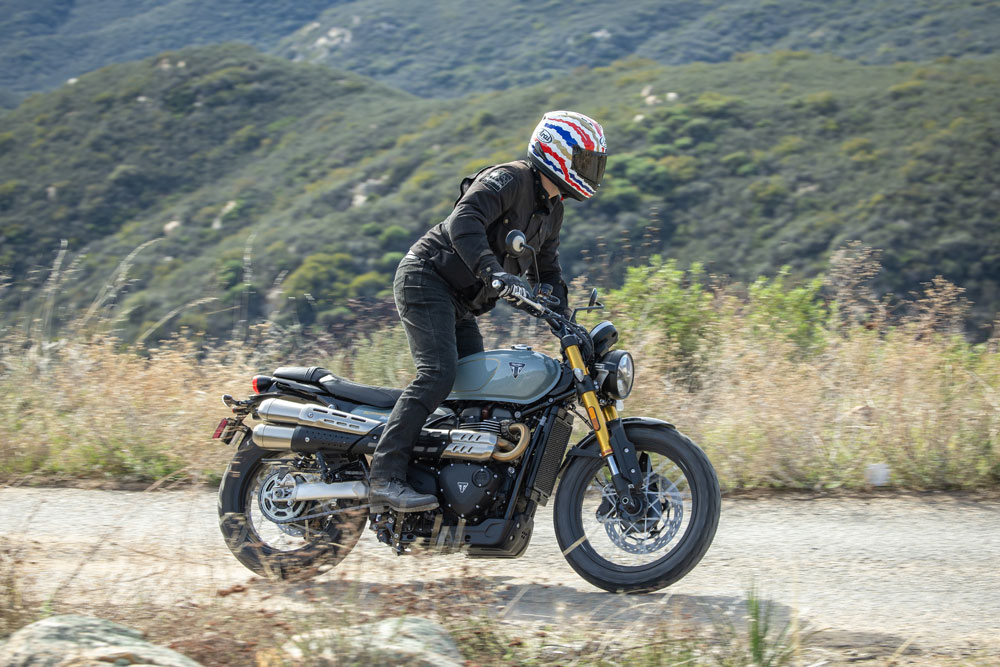
For 2026, the $12,395 900 has been given its most comprehensive technical update to date. At the heart of the Scrambler 900 is the 900cc parallel-twin, one that, given the bike’s ability to go off-road at the rider’s whim, is more than powerful enough and makes you question why you’d want the motor slung between the big brother 1200’s frame rails.
Throttle response is smooth and direct, and you get multiple ride modes from the ECU, but there’s one big problem in which the design department overruled the, er, riding department—that exhaust.
Pretty as it is, the exhaust sits right against the rider’s inner right leg, so when you’re sitting down, you’ll get a nice warming over, as long as you have riding jeans on. If you don’t, you’ll get a not-so-nice burn.
The second issue is that when you’re standing up and riding off-road, the exhaust is routed so it forces your right leg out at an angle, leaving you unable to plant your right foot on the footpeg. How this very large riding conundrum got official HQ approval to go into production is beyond me, because it ruins the one area of riding that is literally in the bike’s name. Anyway, back to the bike.
Triumph has introduced a newly developed tubular steel frame for 2026, paired with a cast-aluminum swingarm that replaces the previous steel unit. The combination reduces weight and sharpens the bike’s response to rider inputs. Despite the exhaust problem and thus the riding stance, the Scrambler’s steering feels light and accurate, particularly when transitioning through a series of bends or navigating uneven pavement.
The suspension is also new from end to end. Conventional forks are gone, replaced by 43mm upside-down Showa units up front. At the rear, preload-adjustable Showa piggyback shocks take over. While adjustment remains simple, the improvement in damping control is obvious on the road, the Scrambler feeling more settled over rough surfaces and less prone to wallow when the pace increases—as long as you don’t overload the semi-off-road tires.
The wheels and brakes have been upgraded as well. Lightweight aluminum rims help cut unsprung mass to improve side-to-side agility, and wheel sizes remain 19 inches at the front and 17 inches at the rear as per the scrambler M.O.
Braking performance takes a step forward thanks to a larger 320mm front disc and a radially mounted four-piston caliper, but there’s still no twin disc/caliper setup like on the Scrambler 1200 range, so that’s something to be aware of.
For the first time, the Scrambler 900 gains lean-sensitive cornering ABS and traction control, bringing it in line with more modern competitors like those southwest of Britain (it starts with an I). Three ride modes—Road, Rain and Off-Road—adjust throttle response and electronic intervention, with the Off-Road setting allowing greater rear-wheel freedom on loose surfaces and allowing you to lock the back wheel and skid, as can be needed on dirt.
The rider interface has been updated with a new hybrid LCD/TFT display that presents information clearly and supports optional Bluetooth connectivity. A USB-C charging port and full LED lighting add practicality.
The Scrambler 900 is a beautiful machine, but I just can’t get over that exhaust, as it almost ruins the riding experience. I get why it’s been done the way it has, but the form-over-function ratio is way off. It looks beautiful, but sometimes, looks ain’t enough. General road cruising is more than fine on the 900, but if I’m buying a Scrambler, it’s going off-road. Oh well, can’t have them all.
2026 Triumph Scrambler 900 | What’s to like?
- Fantastic engine performance
- Great looks
- New suspension works are a treat
2026 Triumph Bonneville T100
Now we’re getting into the real Bonnies.
The T100 is about as British as steak and ale pie. It’s the classic British roadster, one that links the pioneer machines of the late 1950s to now.
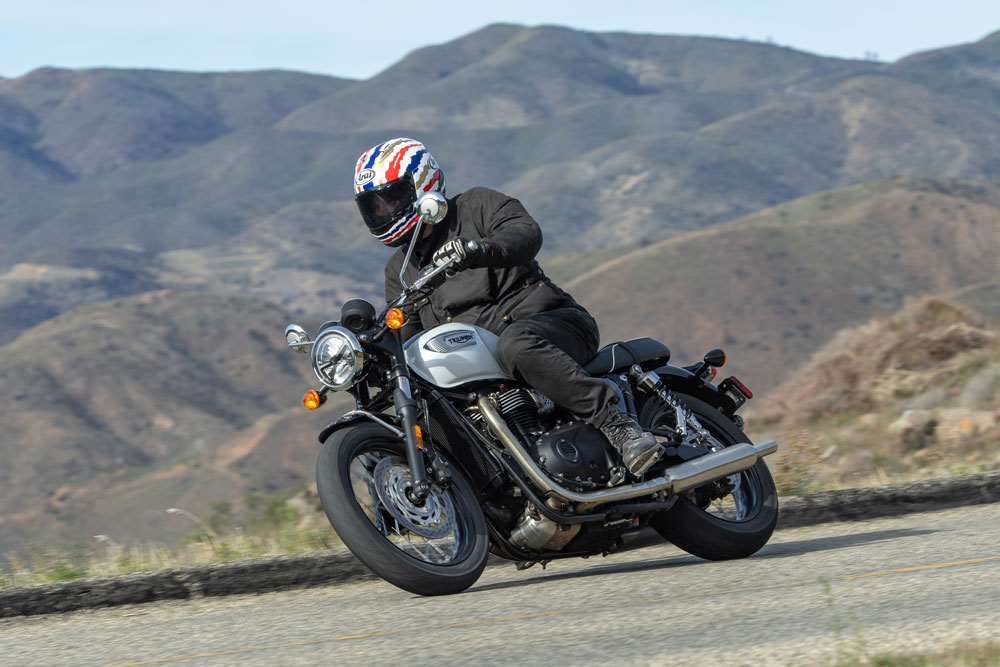
The 2026 edition won me over with its easy, comfortable ergonomics, smooth power delivery, and handsome looks.
The heart of the $11,495 Bonneville T100 remains its 900cc parallel-twin shared with the Scrambler 900. While the engine hasn’t changed dramatically for model year 2026, Triumph has refined the Bonnie’s throttle response and mapping for smoother on/off throttle transitions and stronger low-end torque. Having not ridden the last version of the 900 Bonnie, I can’t honestly say if the changes have made much difference, but as it stands from the hot seat, engine performance was ample, if not overly aggressive.
Like the previous three bikes we’ve tested, the 900 Bonnie gets lean-sensitive electronics in cornering ABS and traction control, the former of which I’m sure riders will be thankful for, while the latter will only be used in extreme cases when road conditions are less than ideal.
The seat height remains 30.8 inches and is about as low as I would want for a roadster, but the upright and neutral ride position means you can ride this Bonnie for hours and hours without getting sore.
The instrumentation has been updated with a new digital instrument panel, replacing the older display. There’s USB-C charging and LED lighting enhances visibility while preserving the bike’s classic aesthetics.
The 900 Bonnie is a charming motorcycle to ride. It’s softly sprung, so you won’t really enjoy being hustled too hard, but to do so misses the point of the ride. It’s thoroughly enjoyable, comfortable and has a refined aesthetic; the only problem is, there’s just one more Bonnie that’s slightly better in every way.
2026 Triumph Bonneville T100 | What’s to like?
- Classic British charm
- An almost vibe-free ride
- Ergonomics that allow you to ride for hours
2026 Triumph Bonneville T120
In truth, there’s always only been one.
The big daddy T120 is the pick of the Bonneville bunch, not so much for the engine, or the chassis, or the ergos, or the electronics, but for a mash-up of all of them. It’s a classy, classic ride in the truest sense.
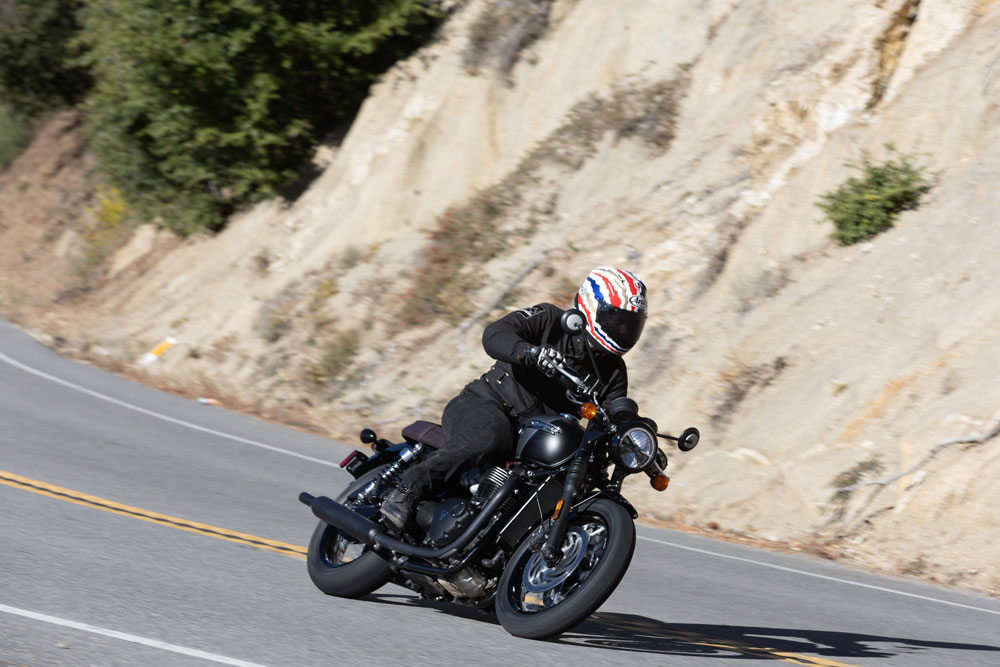
At the core of the $13,995 T120 remains the 1200cc parallel-twin motor that, if you haven’t already figured out by now, I absolutely adore. It’s a powerplant that delivers plenty of smooth, usable torque and possesses a thoroughly engaging character.
In the latest version, Triumph has fine-tuned the engine mapping and throttle response, giving the motor a more linear delivery, particularly at lower revs. The refinement makes low-speed riding between traffic lights a breeze, but there’s lots of performance on hand for when you’re ready to open the gas on the freeway. The exhaust note, too, is rich and evocative and just adds to the T120’s classic appeal.
Again, like the rest of the bikes on test here, the 2026 T120 gets lean-sensitive ABS and traction control comes standard, and Road and Rain ride modes give you a couple of options for the throttle, even if the wet mode is too soft for my taste.
The chassis and suspension have remained largely unchanged for 2026, which is just as well because there wasn’t much wrong with them in the first place. The T120’s handling feels just as composed as before, with the KYB suspension soaking up imperfections while providing a planted, balanced feel through sweeping curves and tighter turns alike.
The T120’s claimed weight of 513 pounds is well balanced, and while it remains a larger motorcycle with substantial presence, its manners are predictable and intuitive.
There are, however, some new mods in the cockpit enhancements that extend to the cockpit. A revised instrument cluster gives clearer, more comprehensive information and allows you to pair your phone for navigation and calls, and there’s a USB-C charging port as standard.
The T120 takes everything that’s good about the T100 and cranks it up a few notches. The engine delivers more usable performance across the rev range, allowing you to hold gears longer as you roll up and down the torque curve, and the twin-disc front end allows the T120 to stop much quicker than the T100.
Ergonomically, the larger chassis fits my frame much better than the T100, and the plank seat is so comfortable I’d be more than happy to do a few big mile days on it, even if that’s not really the bike’s forte.
The T120 is by far my pick of this five-bike bunch, but then it should be. Triumph has had the best part of 65 years to get this right, and they have done so magnificently. I could perhaps see myself with a Bobber if I had three other bikes in the shed, wouldn’t bother with the Speedmaster or the Scrambler, the T100 is a touch too small and slow, but the T120 hits all the right feels, all wrapped in a rolling show of British class and sophistication.CN
2026 Triumph Bonneville T120 | What’s to like?
- Everything about the T100, just a little more
- Beautiful engine delivers great performance
- Twin disc front brakes mean it actually stops!
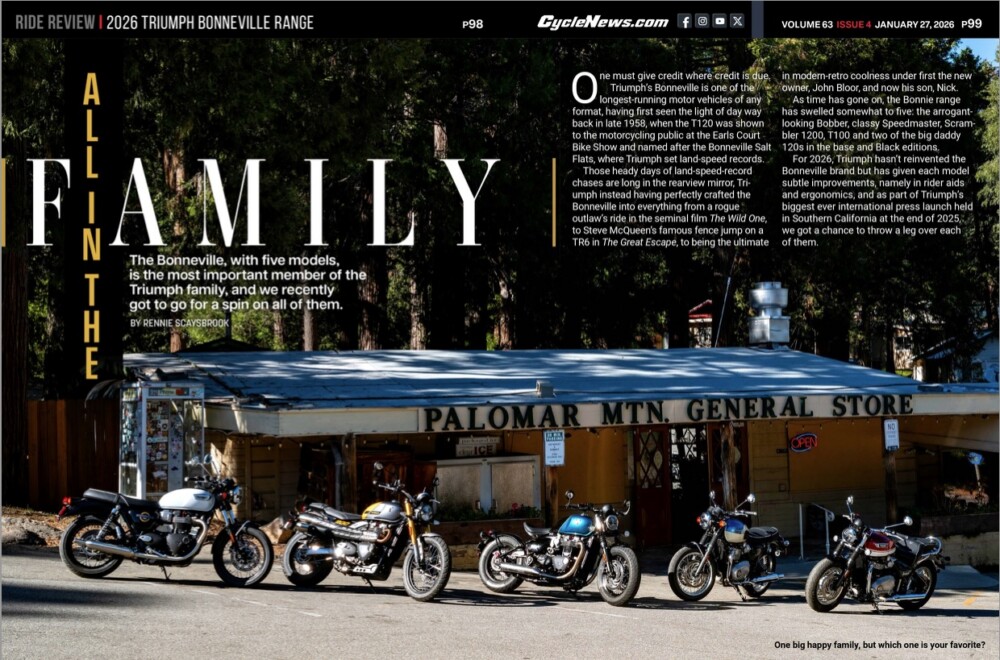
Click here to read the 2026 Triumph Bonneville Range Review in the Cycle News Digital Edition Magazine.
Click here for more Triumph motorcycle reviews and news.
Click here for the latest Cycle News Naked motorcycle reviews and news.
Click here for the latest Cycle News Cruiser motorcycle reviews and news.