Welcome the all-new CRF300F, Honda’s adult entry trail bike replacement for its popular CRF250F, which itself replaced the CRF230F that first appeared in 2003. They just keep growing, don’t they?
Photography by Simon Cudby
The CRF250F underwent significant upgrades in 2019, including the arrival of fuel injection and a larger engine. However, the CRF300F receives an even bigger upgrade with the addition of an extra gear in the transmission, a stronger clutch, stiffer suspension, a power increase and all-new styling.
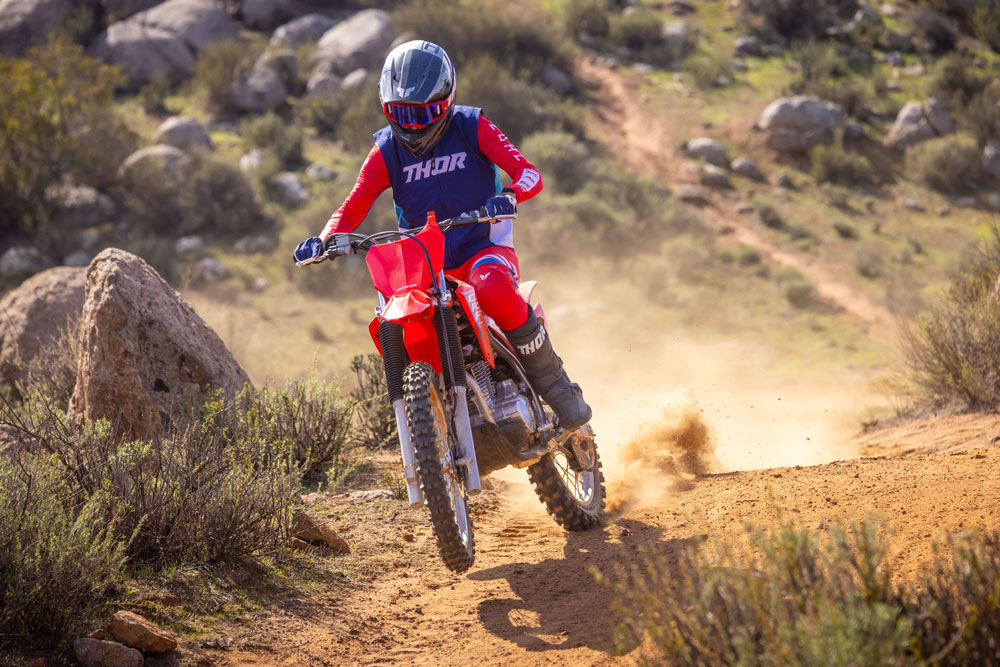
Honda said the goal with the new CRF300F is to deliver more power and versatility than its predecessor. I had little doubt they had accomplished that just by looking at it and its specs, but I would soon find out for sure after riding the bike in the Chocolate Mountains near San Diego, where Honda chose to unveil it to the media for the first time.
What’s In The Box? | 2026 Honda CRF300F Review
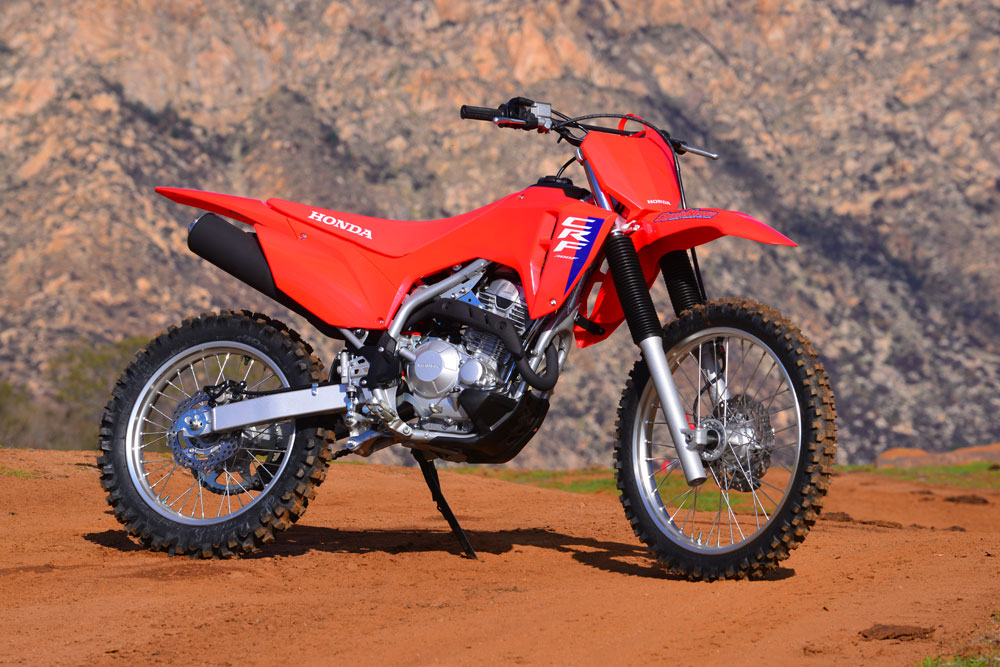
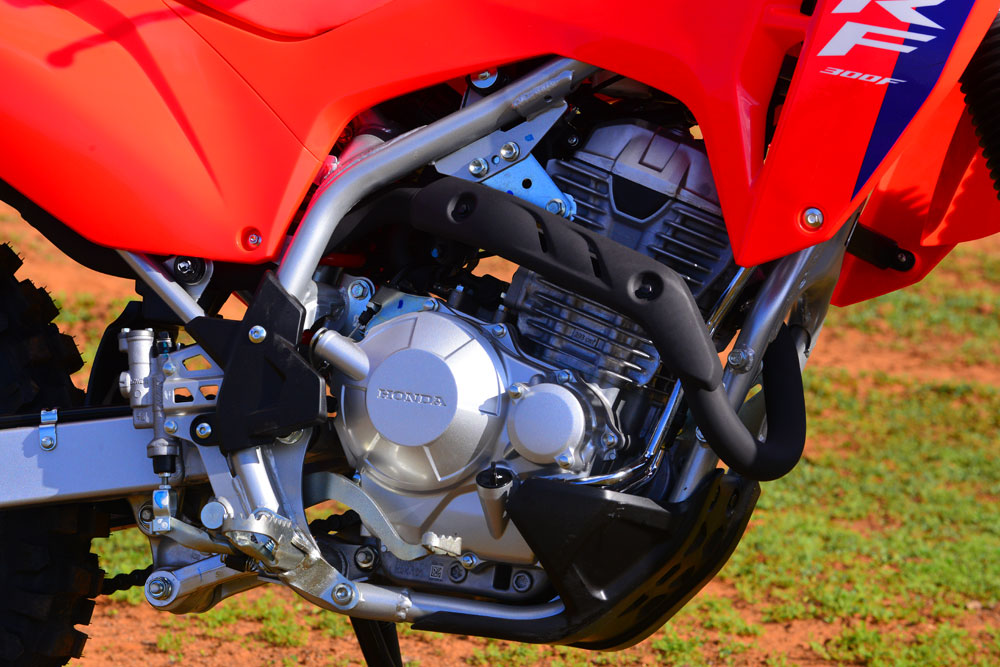
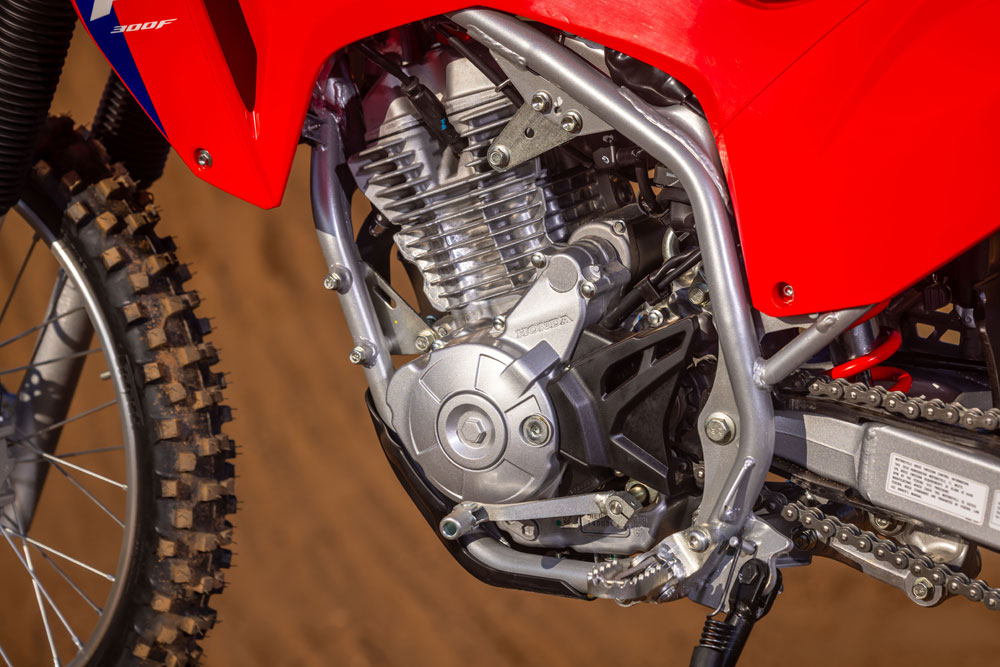
Honda’s largest in its CRF-F family of trail bikes features a new air-cooled, single-cylinder, four-valve, overhead-cam, four-stroke engine with electric start. Compared to the previous CRF250F engine, the CRF300F engine is 44cc larger, 294cc versus 250cc. Its bore is 6mm wider than the CRF250F’s (77.0mm versus 71.0mm), although the stroke remains unchanged at 63.0mm. The compression ratio is slightly lower at 9.3:1 than at 9.6:1.
The 300 continues to use a Keihin electronically controlled fuel-injection system. It now features a new six-speed transmission, replacing the previous five-speed on the CRF250F, offering more versatility. Additional upgrades include new clutch discs with heat-resistant material to improve durability. Because of the bike’s higher power output, an oil cooler has been added to keep engine temperatures in check in hot conditions.
The punchier engine is paired with a new exhaust header and muffler, including a spark arrestor, featuring a larger internal diameter. The CRF300F complies with EPA and CARB off-road emissions standards and is green-sticker legal in California, allowing year-round use in off-road parks nationwide.

Handling improvements include firmer suspension settings with nine-plus inches of wheel travel, an aluminum bottom triple clamp, an aluminum linkage arm, and a redesigned engine hangar. The steel perimeter frame, 1.6-gallon fuel tank, and controls remain unchanged, but the inner diameter of the hydraulic brake lines is reduced to improve braking performance.
The bike features 21- and 18-inch wheels, equipped with aggressive Pirelli Scorpion XC mid-hard knobby tires, and 240mm (front) and 220mm (rear) petal disc brakes.
The CRF300F’s bodywork and graphics are inspired by the current CRF motocross lineup, most notably the radiator shrouds, giving it a fresher, more modern look. Additionally, the side panels now fit more securely due to an updated rear mounting system that replaces the rubber grommet with a screw fastener. Rubber boots guard the fork legs, the plastic skid plate has been reshaped to shield the engine’s new oil line, and nylon guards protect the frame where the rider’s boots contact it.
The steel handlebar features a crossbar with half-waffle grips. The front-brake lever is adjustable, and a handlebar-mounted multifunction switch includes the starter button, ignition indicator, fuel-injection system status, and a low-fuel light that activates when only 0.3 of a gallon remains. The sidestand’s angle has been redesigned for easier operation.
Honda claims the CRF300F weighs 273 pounds ready to ride, which is eight pounds more than the 250.
Twisting The Throttle | 2026 Honda CRF300F Review
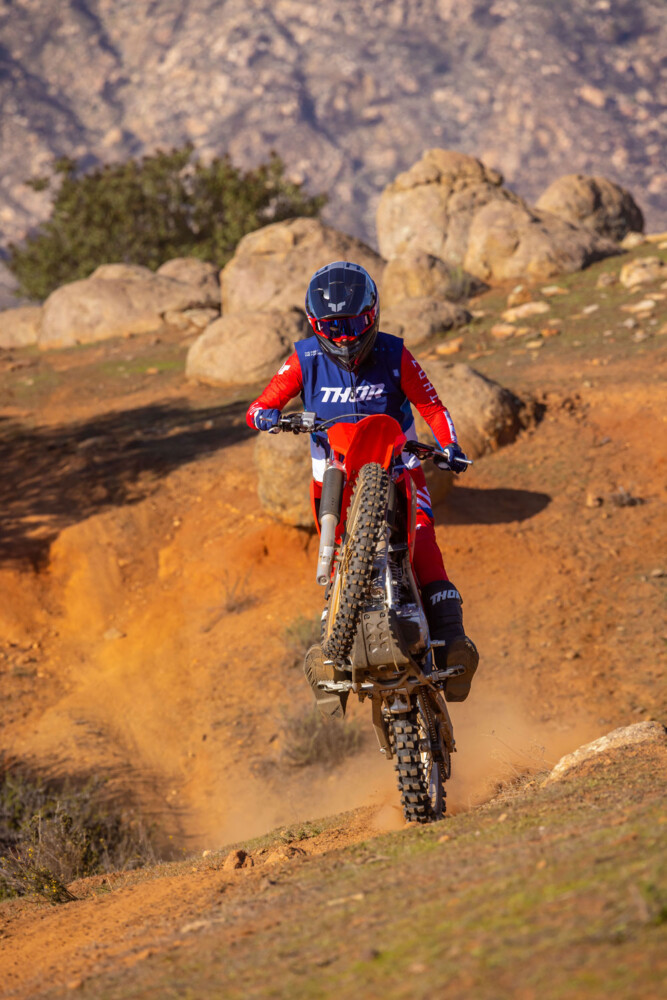
If you’ve ridden the CRF250F before, you’ll quickly notice the 300’s increase in power. It’s not a huge leap, about four horsepower, but you can feel it. Torque has also improved significantly, which is beneficial when riding on tight, twisty trails and technical, slow-moving terrain. Additionally, with the extra gear, the bike responds more quickly and predictably at lower speeds and delivers increased revs on wider-open fire roads. The bike simply feels more responsive and livelier than the 250, without sacrificing overall control. A beginner or novice won’t have any trouble handling the 300, even with its increased displacement and power, and an experienced rider will enjoy the extra ponies, as long as they keep in mind that it’s not a race bike, which is sometimes hard to do.
Another noticeable difference is suspension settings. The 41mm Showa fork and single Showa shock now hold up much better, but they are approaching the stiff side. However, I’d rather have it that way than the other way around, as Honda noted some owners expressed concern with the 250. The firmer suspension allows you to ride the 300 a little harder and more aggressively without fear of harsh bottoming on seemingly harmless bumps. You’ll also appreciate the added front-wheel travel the 300 has over the 250, approximately an inch. The rear remains the same at 9.1 inches. Unfortunately, suspension is still nonadjustable except for rear preload, but Honda did a good job of providing a neutral setting that I think most will be happy with.
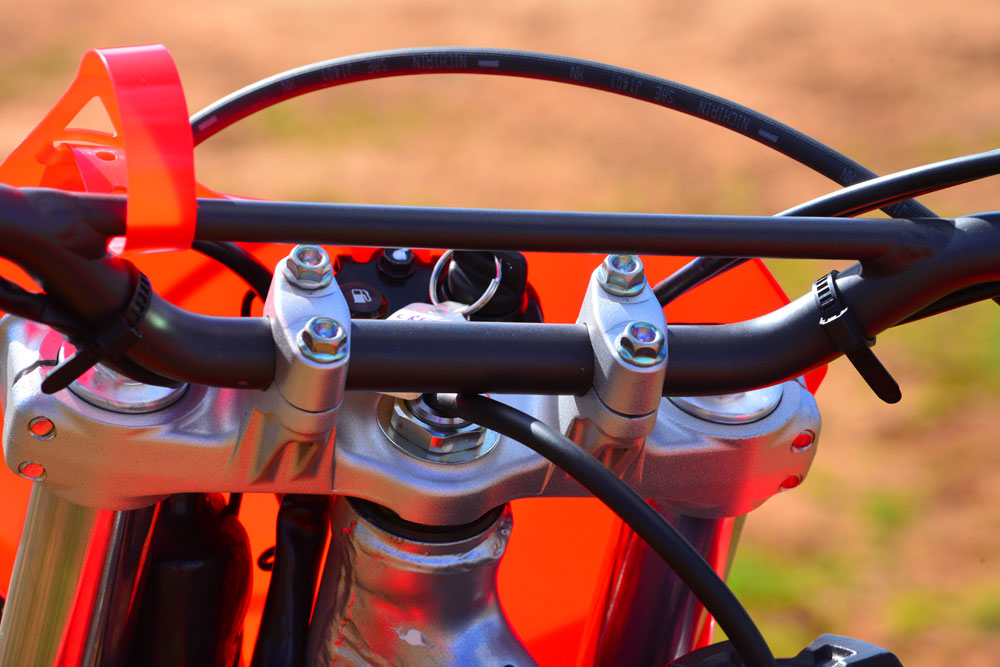
Honda also did a good job matching up the transmission’s six-speed gear ratios to the motor. There aren’t any big gaps between shifts, and there seems to be a gear for every situation, though gear changes are a bit notchy. The clutch, however, has great feel and showed no signs of exhaustion when put to the test, at least on our first day on the bike. Engagement is seamless, which beginners will appreciate.
The CRF300F is not particularly light, not for a small-sized trail bike. At a claimed 273 pounds, full fuel, it’s eight pounds heavier than the 250. That might sound like a lot, but, in my opinion, it’s not a game-changer by any means. You’d be hard-pressed to feel the difference on the trail. I couldn’t, even riding them back-to-back. You can thank the improved suspension and more power for that.
Seat height isn’t especially low at 35 inches, which is a tick higher than the 250. Since there is less shock sag when you sit on it, the bike feels a tad tall, especially for a not-quite-full-size dirt bike. Fortunately, the bike is trim and narrow. One rider I spoke with, who said she was 5-foot-6, said she felt comfortable on the bike despite not being able to sit “flat-footed.” I, at 6-foot-tall, had no issues and didn’t feel too cramped overall. Even with its tall seat height, the bike has a low center of gravity, which improves overall handling and rider confidence. The bike also has decent ground clearance at 11.4 inches.
There isn’t much more to get excited about, really. The important instrumentation is a low-fuel indicator. There are no handguards, and there are no lights, blinkers or horn, and since there is no license plate, the CRF300F is not street-legal; it is what it is, a full-on dirt bike. If you also want to ride legally on the road, consider the CRF300L and CRF300L Rally. Street legal or not, a headlight would’ve been a nice addition for the CRF300F.
Loading Up | 2026 Honda CRF300F Review
Simply put, Honda took an already good trail bike (the CRF250F) and made it even better with the CRF300F. Not just better, but much better, thanks to its stiffer and longer-travel suspension, a more powerful and torquey engine, a more versatile transmission, and a fresher look. (It really does look good.) Plus, it’s just as easy, if not easier, to ride than before. It might be a little heavier, but that’s a small price to pay for all the improvements you get that aren’t easy to do on your own. And speaking of price, perhaps the best part is that the CRF300F costs the same as the outgoing CRF250F at $4999! A much better motorcycle at the same price? That’s awesome.
So, did Honda accomplish its goal with the new CRF300F to make it more powerful and versatile than its predecessor? I’d say so. And then some.CN
VIDEO | 2026 Honda CRF300F First Ride Test
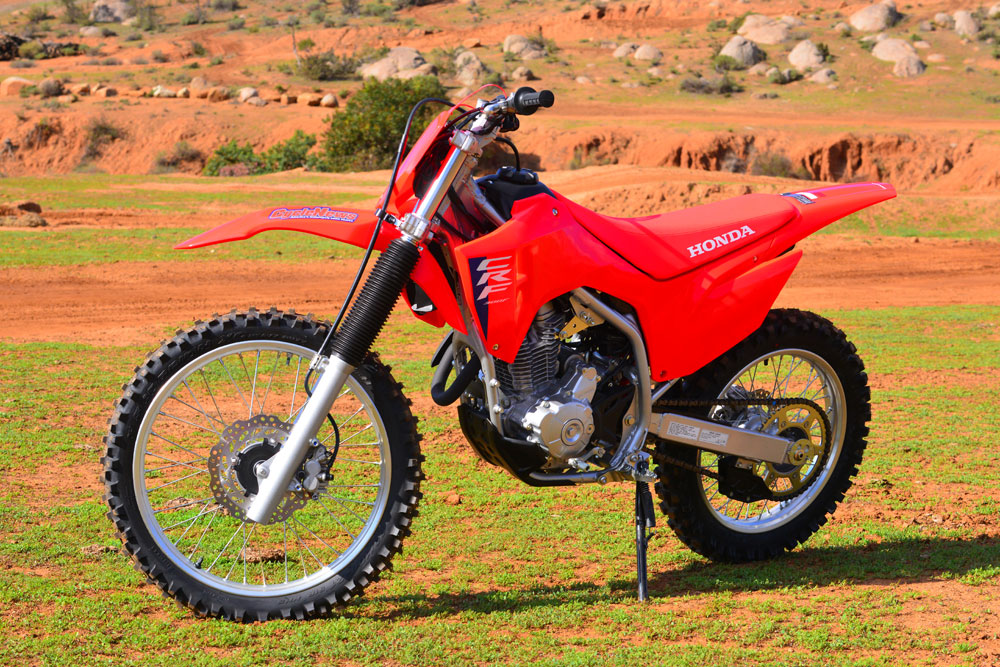
2026 Honda CRF300F Specifications
| MSRP | $4999 |
| Engine | Single-cylinder, 4-stroke |
| Valvetrain | SOHC, 4-valve |
| Cooling System | Air |
| Displacement | 294cc |
| Bore x Stroke | 77.0 x 63.0mm |
| Compression Ratio | 9.3:1 |
| Transmission/Final Drive | 6-speed/chain |
| Fuel System | Electronic fuel injection w/ 34mm throttle body |
| Clutch | Wet, multiplate; cable actuation |
| Frame | Steel perimeter |
| Front Suspension | Showa 41mm conventional fork, non-adj. |
| Rear Suspension | Showa shock, spring preload adj. |
| Front-Wheel Travel | 9.5 in. |
| Rear-Wheel Travel | 9.1 in. |
| Front Brake | 2-piston caliper, 240mm disc |
| Rear Brake | 1-piston caliper, 220mm disc |
| Front Wheel | 21 in. |
| Rear Wheel | 18 in. |
| Front Tire | Pirelli Scorpion XC Mid Hard; 80/100-21 |
| Rear Tire | Pirelli Scorpion XC Mid Hard; 100/100-18 |
| Rake | 25.7° |
| Trail | 3.9 in. |
| Wheelbase | 55.8 in. |
| Ground Clearance | 11.4 in. |
| Claimed Seat Height | 35.0 in. |
| Fuel Capacity | 1.6 gal. |
| Weight (wet, claimed) | 273 lbs. |
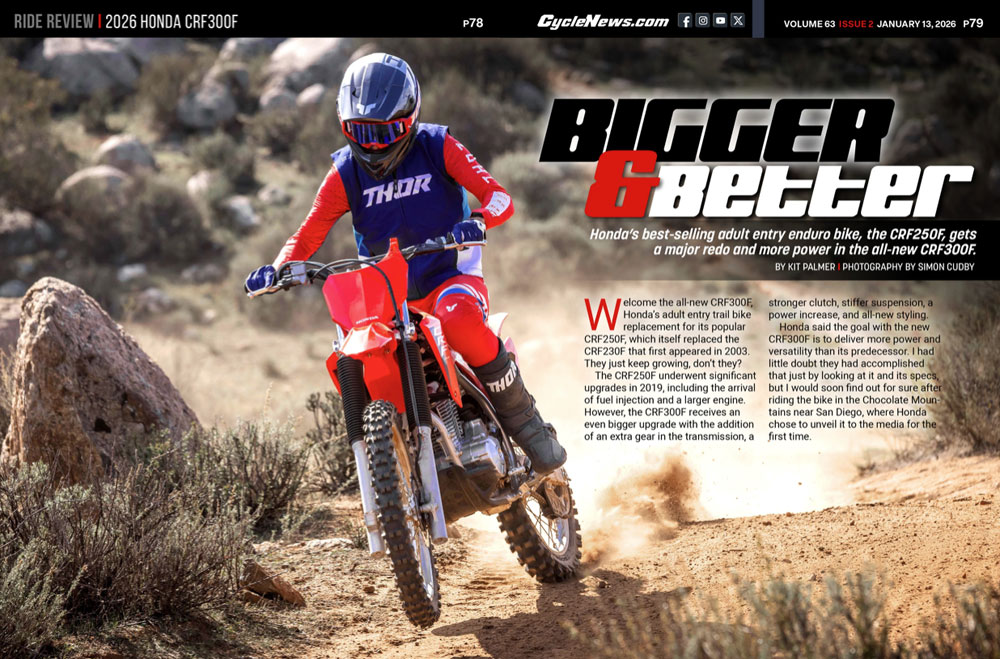
Click here to read the 2026 Honda CRF300F Review in the Cycle News Digital Edition Magazine.
VIDEO | Cycle News Show Issue 2
Click here for the latest Cycle News Off-Road motorcycle reviews and news.
Click here for more Honda motorcycle reviews and news.