Most people think that BMW invented the adventure motorcycle category, but Honda was one of the first to produce mass-market adventure bikes. The problem for those of us who don’t reside in Europe is that American Honda didn’t seem that interested in catering to this very niche market back in the early ’80s, and while they teased us from afar with everything from the Africa Twin 750 to no less than three previous generations of the Transalp, other than a brief stint from ’89 to ’90, we were told that the market wasn’t yet mature. Well, it’s fully mature now, so for 2024, Honda is not only offering the Transalp in America, but they’ve also completely revamped this legendary bike to meet the current customer demand and, of course, to make it competitive in the quickly advancing ADV marketplace.
By Keith Dowdle | Photography by Align Media
We were invited to join them for the debut press event to see for ourselves just how the new Transalp might compete with the likes of the Yamaha Tenere 700, which currently dominates the “outlier” category of ADV hardware.
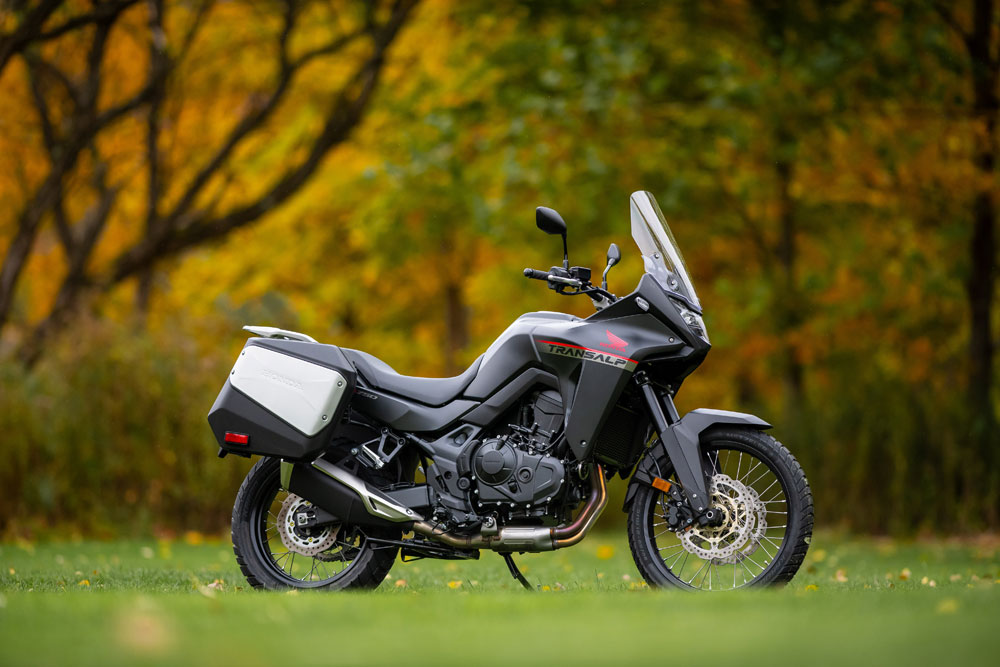
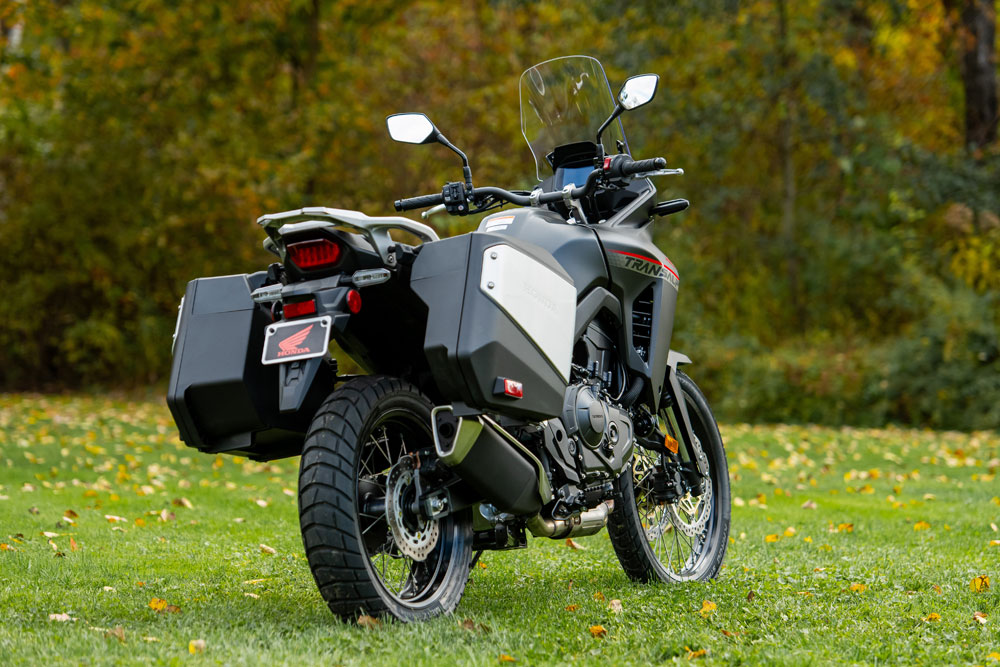
Initially, the 2024 Transalp looks vulnerable when thinking about taking it off-road. The low-hanging exhaust and other bits dangling from its relatively low-slung chassis, with a seat height of just 33.7 inches, give the impression that this bike is road-going only. Thankfully, Honda has an entire menu of accessory packages to suit every rider’s needs, including one with all the necessary parts to protect those otherwise vulnerable undersides. Most of the bikes that we rode came equipped with the Adventure Collection, but there are three other accessory packages available—City, Comfort and Touring—to make ordering what you need for your style of riding easy and convenient.
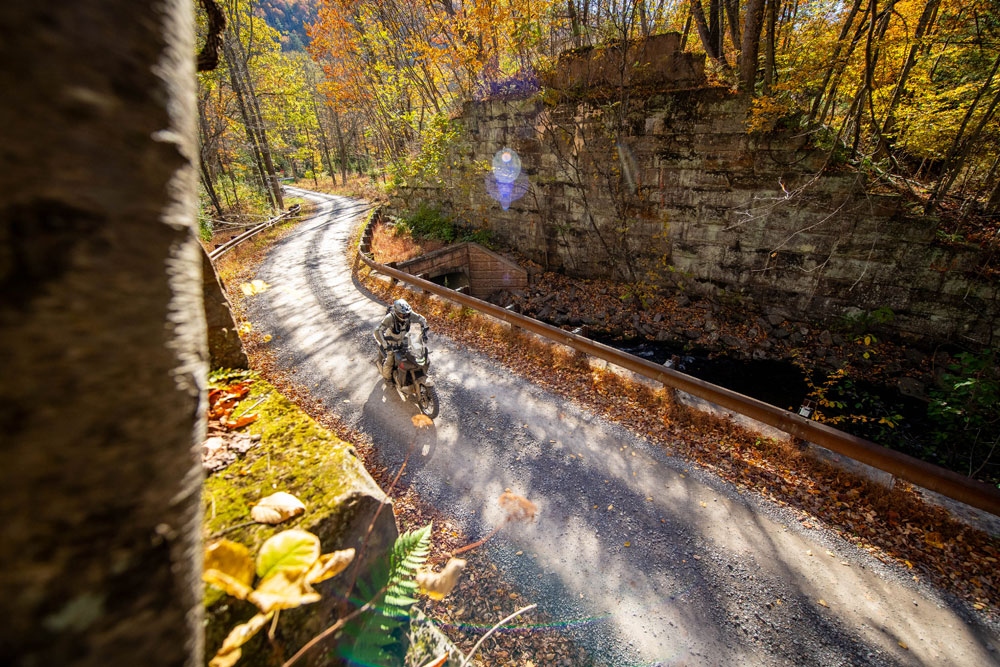
Since the course for the press event was the PA Wilds BDR-X (a backcountry loop in Pennsylvania for dual-sport and ADV travel), I was lucky to get a bike fitted with their accessory enduro footpegs, which worked better than expected for factory accessory pegs and were more than adequate in keeping my feet firmly planted over the roughest terrain we encountered. All our press bikes were also set up with Bridgestone AX41 tires, which looked beautiful on the Transalp and really worked well for the type of riding we were doing.
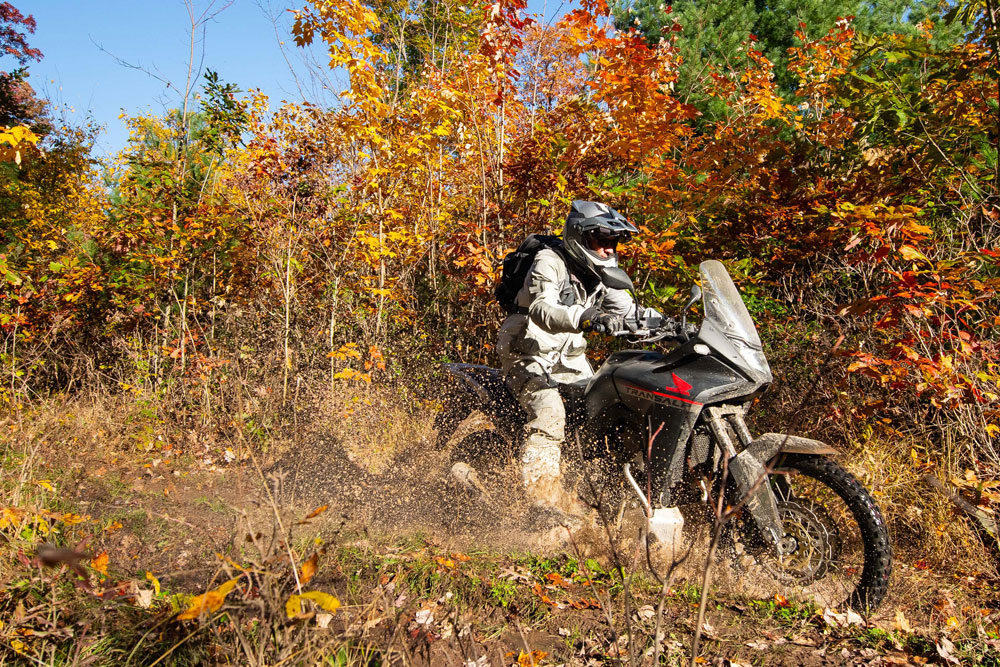
The PA Wilds BDR-X was perfect for an introduction to the new Transalp. By combining fast-flowing sections of dirt and street, the true essence of what the Transalp is best at shines through. The optional hard sections made up of steep rocky descent and trails filled with slick tree roots showed just how off-road-capable the bike is, although the suspension would need a bit of attention if you planned to do much of this sort of riding. That said, the bike performed way better than I ever expected.
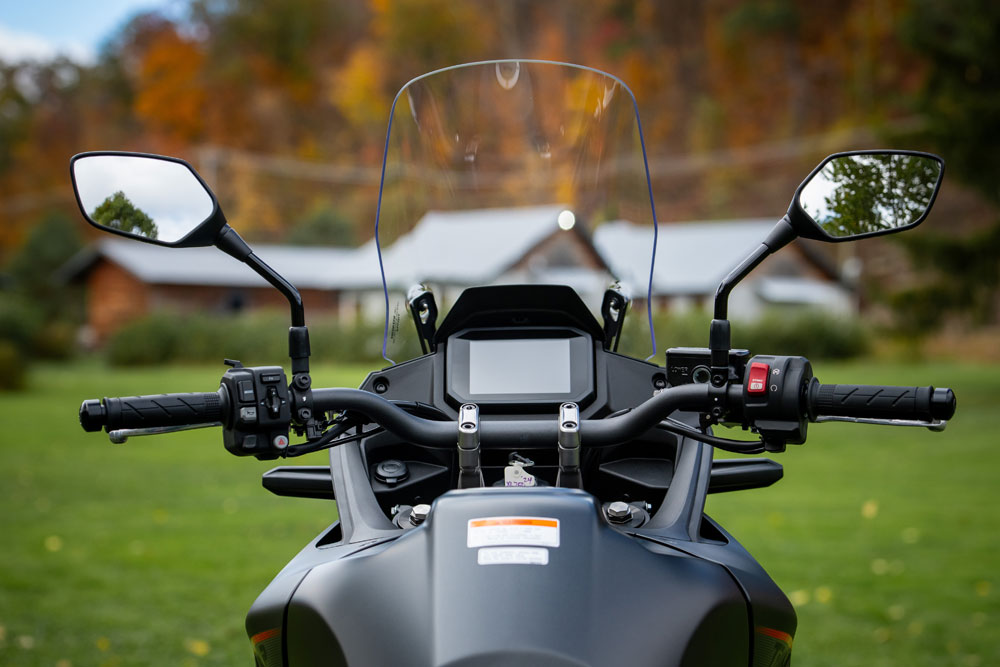
The electronics suite is very comprehensive with Sport, Gravel, Rain and Standard, along with a fully customizable User mode that offers lots of rider aids, although staying in some of the settings is frustrating. More on that later. It also comes with a quickshifter, which works flawlessly and can be adjusted to three different shift levels. The accessory heated grips, fitted to our press bikes, integrate nicely into the five-inch, full-color TFT screen, which is also customizable with four different display options—and the bike has self-canceling turn signals. Who could ask for more? Oh wait, there’s no cruise control. What?
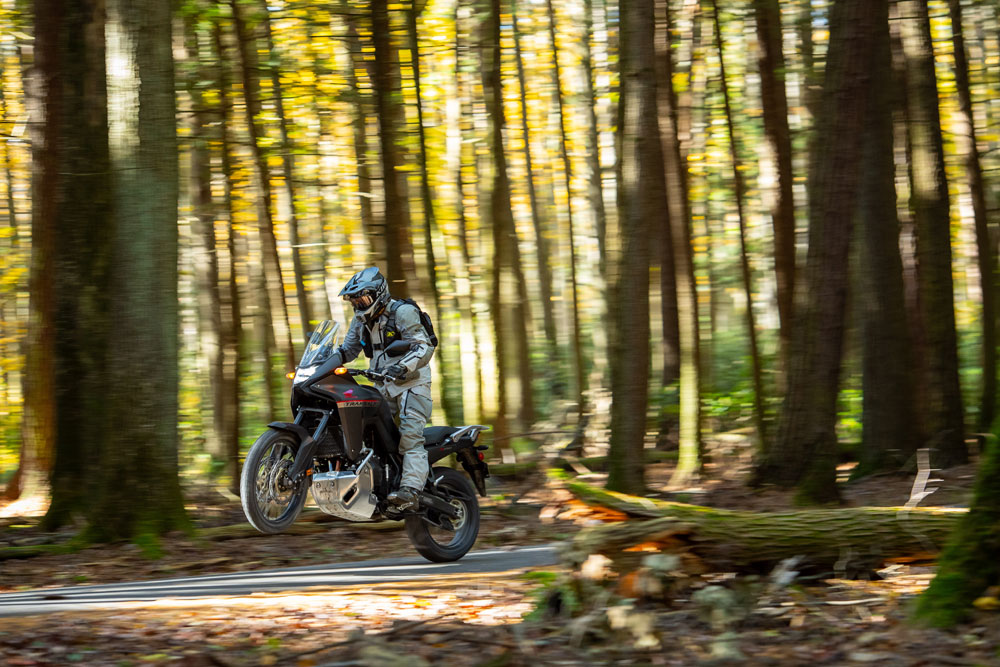
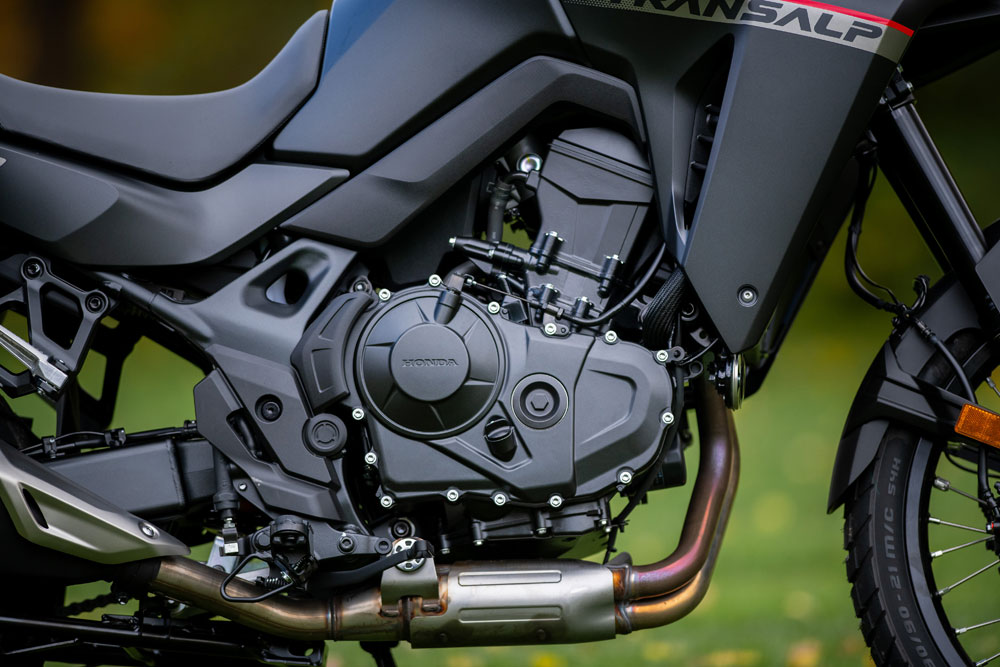
As we set off on the first of two days of riding, the smooth-shifting transmission of the Unicam 755cc parallel twin delivers the typical Honda experience as you roll on the power. It isn’t overwhelming, but there’s enough to excite the senses from idle to redline, and the power curve has no holes whatsoever. Whenever and wherever you need throttle, it’s always there—and with a surprising amount of top-end power to boot. I found it easy to slip the clutch in third gear at about eight thousand rpm, suppress the suspension, and roll up into a nice wheelie when the power setting was full. Sport and User were the riding modes I ran most during our two-day ride.
Rain reduces the power to nearly nothing, and Gravel was too invasive for me when riding off-road, as the ABS and HSTC (Honda Selectable Torque Control), or traction control to us non-Hondroids, was constantly engaging. Once in User mode, the ABS to the rear wheel can be completely disabled, and the traction control, sorry, Hondroids, can be shut off, allowing for sliding of the rear into and out of off-road corners. I put the power setting to full power and the engine braking to the lowest level (there are three adjustments for that), the ABS and TC off, and once you’re set, the bike comes alive. But as was evident from everyone’s keys being left on during long breaks, most of the editors, including yours truly found it frustrating that turning the key off meant going through the entire, not-so-simple process of putting everything back where you want it for off-road. If you leave the key on and use the kill switch, the ABS and TC stay off, and there are no surprises when you get going again.
Aside from that little peeve, the bike performs incredibly off-road. It’s nimble and light on its feet, and the weight is perfectly centered for full-throttle rear-wheel drifts as well as tight technical terrain. There’s no top-heavy feel, and you can lean the bike way over for something like a spin-around, 180° turn on a tight trail, and it never feels too heavy or like you’re going to drop it. The quickshifter is fantastic for both on- and off-road, and I rarely even touched the clutch once the bike was rolling. Even in technical terrain, very little clutch is needed to manipulate the 459-pound (wet) machine.
With all the rider aids, a quickshifter, and self-canceling turn signals—none of which are offered on the Yamaha Tenere 700—the Transalp would send Yamaha scrambling, as it is just as capable off-road as the Tenere, with the suspension being the only limiting factor. I had an absolute ball riding this bike in the dirt, but if I owned one, I would completely replace the suspension for better off-road control, as the standard Showa suspension offers no adjustment for anything other than preload. Bummer. But that’s how they’re able to hit the incredibly low price point of $9999. Good suspension drives up the price of any new model, and, let’s face it, the buyer for the Transalp is probably not planning to pound this bike over gnarly boulders as we did at the press intro, anyway. The suspension will be fine for most buyers, and Honda knows that they can attract more customers with a low retail price than by touting suspension specs that a good percentage of customers don’t understand anyway and will probably never even need if they’re riding pavement and gravel roads.
Once back on the tarmac, the transmission on the new Transalp is as smooth as glass, and the motor purrs along effortlessly. The factory electronic settings work well, and that’s great because you can’t change anything in any mode other than User, but I didn’t feel it was necessary. And if you don’t like them, there’s no reason why you couldn’t run User mode on the road and set it to whatever you desire. For me, Sport was great, and again, there were no issues with the amount of power available from your right wrist. Twist it hard and it goes.
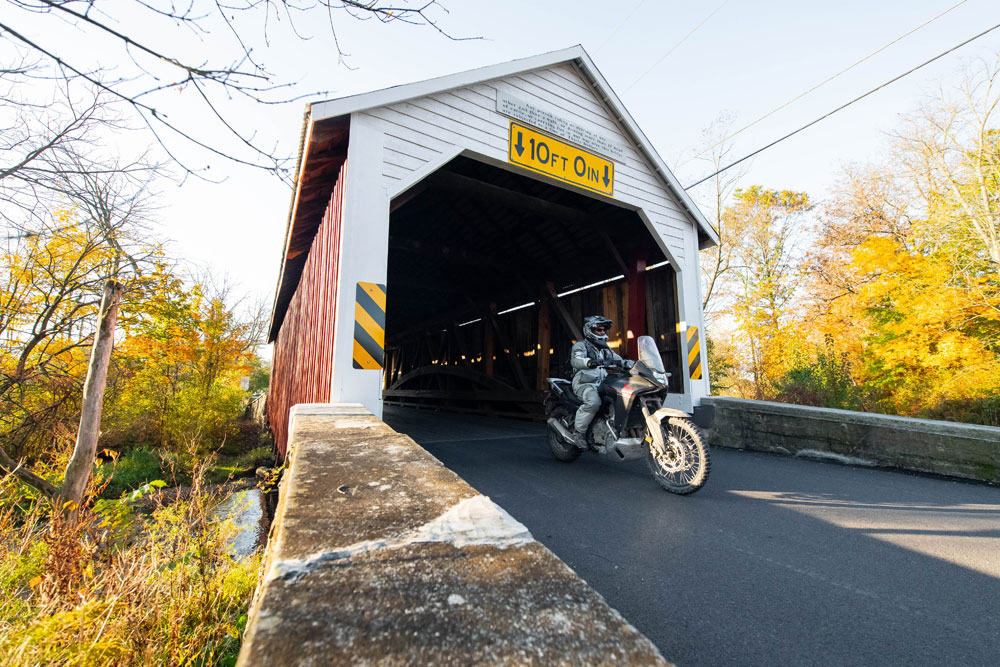
Honda nailed the power curve on the Transalp, and it’s hard to make a mistake no matter what gear you’re in. There’s power all the way through, making riding this bike a blast whether you’re a beginner or an advanced rider. It’s simply a fun bike to ride.
Street manners, even with the 21-inch front wheel, are lively and predictable, and the bike—remember ours had big-block tires fitted—handles fast corners and slow-speed city riding with ease. The six-speed transmission lets you roll down long stretches of tarmac while only taking small sips of fuel from the 4.5-gallon tank. The wind protection directs the air around your helmet, and there was little to no buffeting on my 5’9” frame, even when wearing an ADV helmet with a visor attached. The brakes are another area where Honda always seems to leave the competition behind—they’re simply the best. Smooth and precise, with lots of feel and feedback, you always know exactly how much or how little to apply.
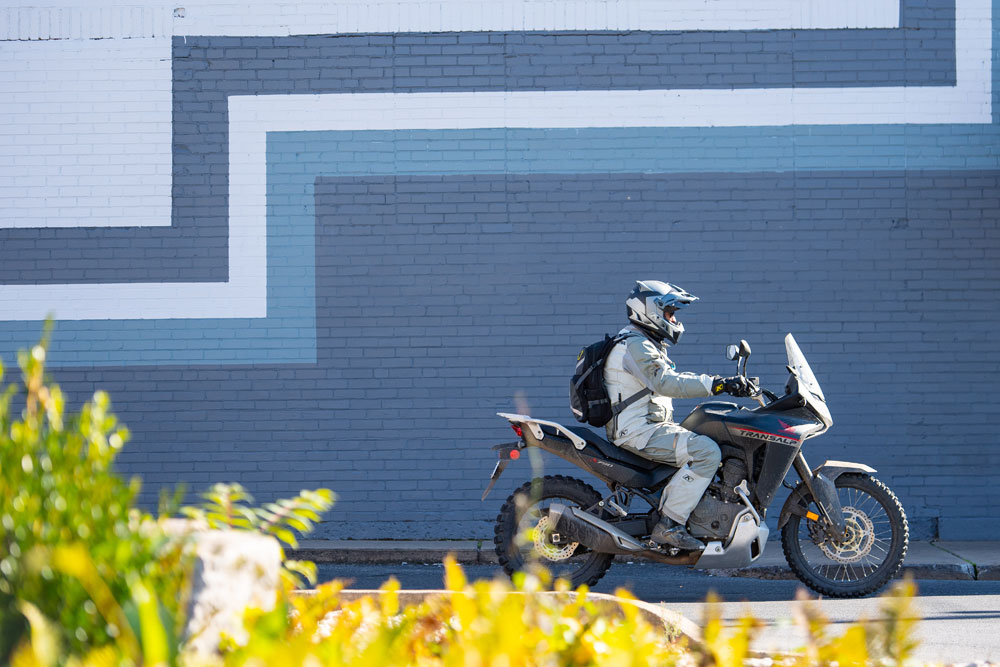
All in all, the 2024 XL750R Transalp is an amazing machine. I’m not sure why Honda didn’t include cruise control (they’ll certainly hear about that from customers and dealers alike), and if you like riding aggressively off-road, you’ll need to spend some money on the suspension, but at an MSRP of just $9999, it’s an incredible value. It offers an unmatched electronics suite packed with ride modes and adjustability, a quickshifter, all LED lighting, and it’s ready to accept a whole host of available accessories—plus, it’s a Honda, so you know it’s going to be reliable and ready every time you’re ready to ride.CN
VIDEO | 2024 Honda XL750R Transalp Review

Honda Transalp
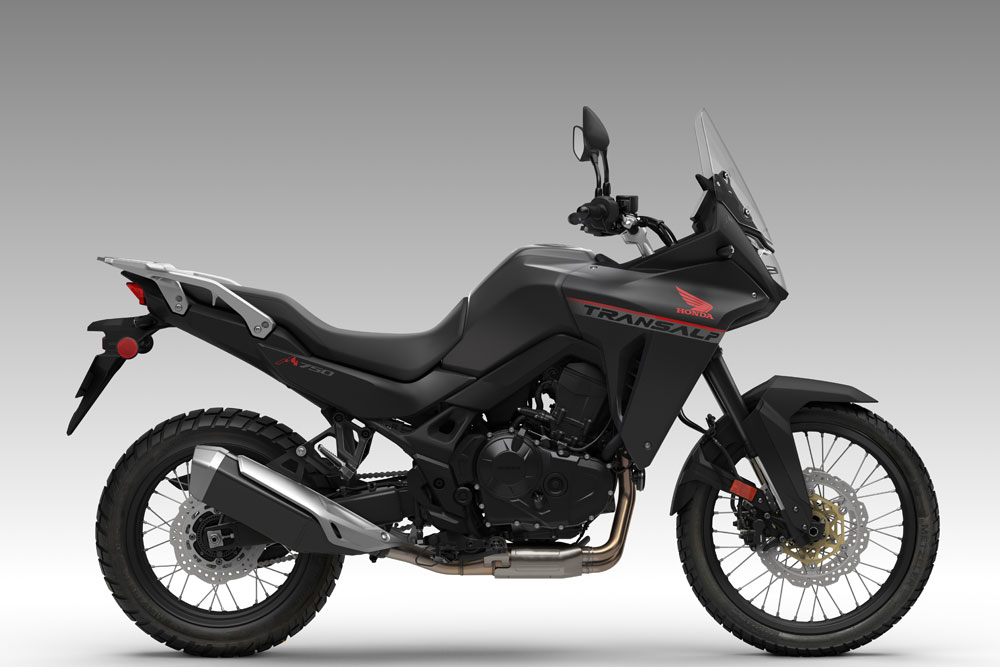
2024 Honda XL750 Transalp Specifications
| MSRP: | $9999 |
| Engine Type: | 24.5° inline-2-cylinder 4-stroke |
| Displacement: | 755cc |
| Cooling System: | Liquid |
| Valvetrain: | OHC Unicam, 4 valves per cylinder, 35.5mm intake valves, 29mm exhaust valves |
| Bore x Stroke: | 87.0 x 63.5mm |
| Compression Ratio: | 11.0:1 |
| Induction: | PGM-FI; 46mm throttle bodies |
| Ignition: | Fully transistorized |
| Electronics: | Rider Mode, Engine Mode, Engine Brake Mode, Torque Control w/ Wheelie Control, ABS on/off (rear only) |
| Transmission: | Manual, 6-speed |
| Clutch: | Wet, multi-disc |
| Final Drive: | 16T/45T chain-driven |
| Frame: | Steel diamond mainframe & subframe |
| Front Suspension: | 43mm Showa SFF-CATM telescopic inverted fork w/ spring-preload adj. |
| Rear Suspension: | Pro-Link w/ single Showa remote-reservoir shock w/ spring-preload adj. |
| Front-Wheel Travel: | 7.9 in. |
| Rear-Wheel Travel: | 7.5 in. |
| Front Brake: | Dual 310mm “wave” discs w/ hydraulic 2-piston calipers; ABS |
| Rear Brake: | Single 256mm “wave” disc w/ hydraulic 1-piston caliper; ABS |
| Front Tire: | 90/90-21 in. |
| Rear Tire: | 150/70R-18 in. |
| Rake / Trail: | 27° / 4.4 in. |
| Seat Height: | 33.7 in. |
| Ground Clearance: | 8.3 in. |
| Wheelbase: | 61.5 in. |
| Fuel Capacity: | 4.5 gal. |
| Weight (curb, claimed): | 459 lbs. |
| Color: | Matte Black Metallic |
Click here to read the 2024 Honda XL750R Transalp Review in the Cycle News Digital Edition Magazine.
Click here for the latest Cycle News Adventure motorcycle reviews and news.
Click here for more Honda motorcycle reviews and news.