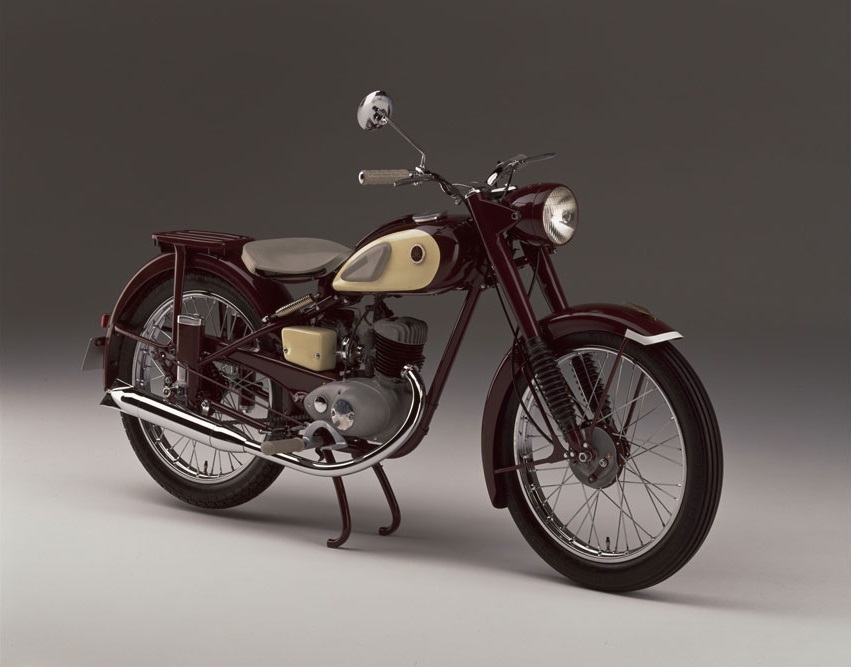
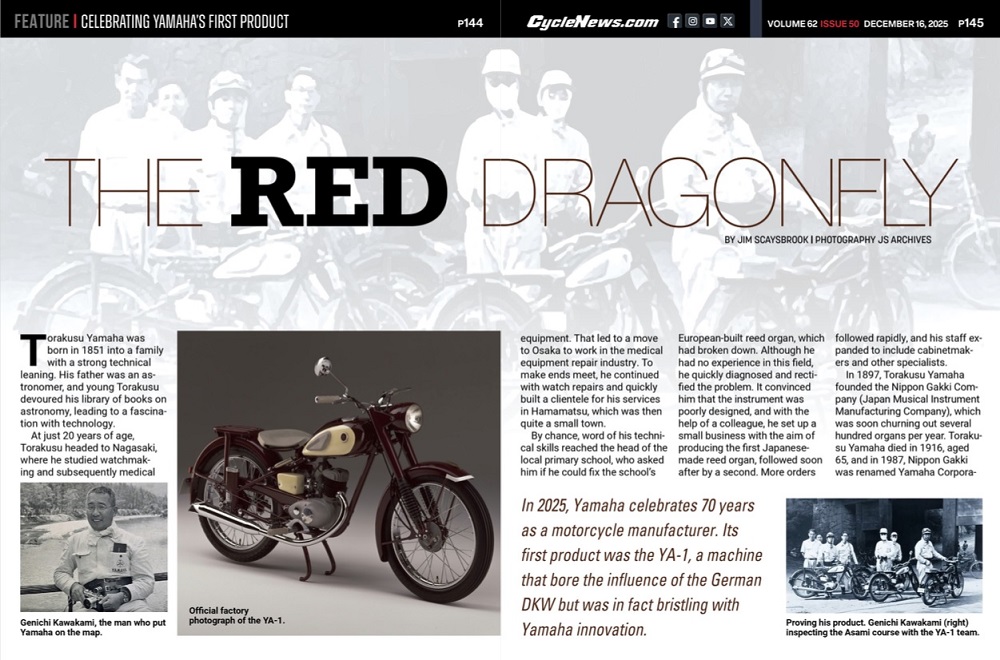
In 2025, Yamaha celebrates 70 years as a motorcycle manufacturer. Its first product was the YA-1, a machine that bore the influence of the German DKW but was in fact bristling with Yamaha innovation.
Official factory photograph of the YA-1.
By Jim Scaysbrook | Photography by Yamaha Motor Corp, Jim Scaysbrook, Bob Weaver
Torakusu Yamaha was born in 1851 into a family with a strong technical leaning. His father was an astronomer, and young Torakusu devoured his library of books on astronomy, leading to a fascination with technology.
At just 20 years of age, Torakusu headed to Nagasaki, where he studied watchmaking and subsequently medical equipment. That led to a move to Osaka to work in the medical equipment repair industry. To make ends meet, he continued with watch repairs and quickly built a clientele for his services in Hamamatsu, which was then quite a small town.
By chance, word of his technical skills reached the head of the local primary school, who asked him if he could fix the school’s European-built reed organ, which had broken down. Although he had no experience in this field, he quickly diagnosed and rectified the problem. It convinced him that the instrument was poorly designed, and with the help of a colleague, he set up a small business with the aim of producing the first Japanese-made reed organ, followed soon after by a second. More orders followed rapidly, and his staff expanded to include cabinetmakers and other specialists.
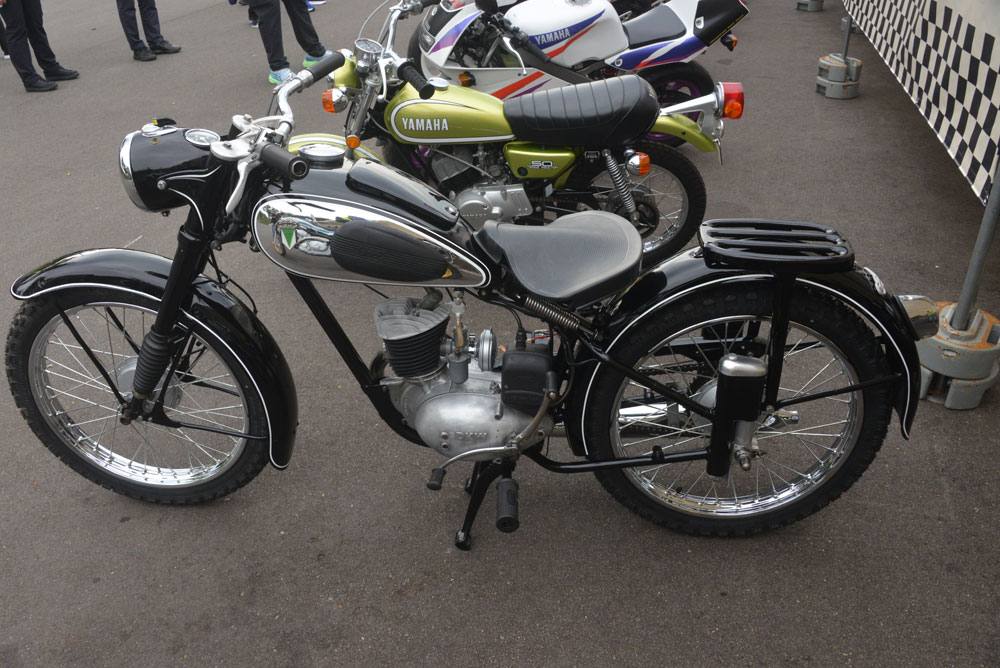
A post-war DKW RT125 on display at Sugo.
In 1897, Torakusu Yamaha founded the Nippon Gakki Company (Japan Musical Instrument Manufacturing Company), which was soon churning out several hundred organs per year. Torakusu Yamaha died in 1916, aged 65, and in 1987, Nippon Gakki was renamed Yamaha Corporation to mark 100 years since the first reed organ was built.
Under new CEO Chiyomaru Amano, the company prospered and by 1920 had over 1000 employees. However, a disastrous fire destroyed two of the factories, and following more property losses in the Kanto earthquake of 1923, the company was on the edge of bankruptcy.
It was rescued by Kaichi Kawakami, the director of Sumitomo Wire Company, who became president of Nippon Gakki in 1927. In August 1938, the company’s management was taken over by the military, and the main factory was repurposed for war production, specializing in variable-pitch wooden and metal propellers. Following the Second World War, the sole remaining plant was confiscated by the government and returned to the production of musical instruments, specifically harmonicas, which were exported to the USA.
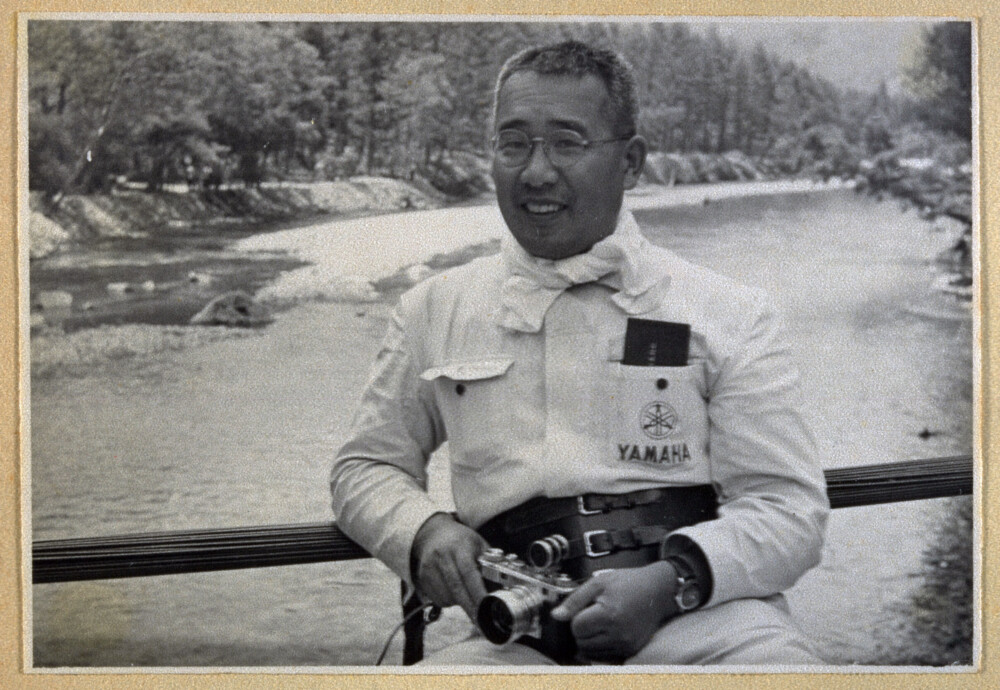
Genichi Kawakami, the man who put Yamaha on the map.
Following Kaichi Kawakami’s death in 1950, his son Genichi Kawakami became president of Nippon Gakki. As the economy improved in Japan, he became convinced that the need for light, economical transportation should be addressed but decided against building scooters or mopeds, preferring to produce proper (i.e., European-style) motorcycles. By 1952, things had stabilized somewhat in Japan, and the factory was returned to its owners (along with the crucial machine tools that had been used for the propeller manufacturing), who decided that in such austere times the market for musical instruments was extremely limited.
Although at the time there were around 150 motorcycle manufacturers in Japan, led by Honda, this was the field selected by Nippon Gakki. By 1953, annual production of motorcycles in Japan had reached 166,000, fueled by new laws that permitted riders as young as 14 to obtain a license without taking a test. The new motorcycle company was capitalized at 30 million yen (about $100,000 USD at the time), with 270 employees, using the same equipment that had produced aircraft propellers during the war.
Before making any specific decisions as to models, Kawakami sent two of his best engineers to Europe on a fact-finding tour. Not by coincidence, one port of call was the post-war DKW plant in Ingolstadt, Germany, where production of the two-stroke RT125 had resumed in 1949.
That model had been plundered post-war as “war reparations” by several allied manufacturers, including BSA, Harley-Davidson, Moto Morini and others. It meant that the RT125 could be copied by others, for free, and Kawakami’s engineers wasted no time in doing so. This became Yamaha’s first motorcycle, the YA-1, but it was far from a mirror copy of the RT125.
Development began in October 1953, and it was a runner by August 1954. By September 1954, a prototype motorcycle was ready for testing. The prototype racked up over 6000 miles of testing by October 1954 (with Kawakami himself joining the riders on several occasions) before the order was given to commence production, which occurred in January 1955.
The DKW bore and stroke of 52mm x 58mm remained, but importantly, a four-speed transmission was fitted instead of the DKW’s three-speeder. Primary drive was by gear instead of chain, and it employed a primary kickstarting system, allowing the engine to be started in any gear. It was also possible to select neutral by a half-stroke of the gear lever from any of the four gears. Weighing just 207 pounds, the YA-1 was light and nimble.
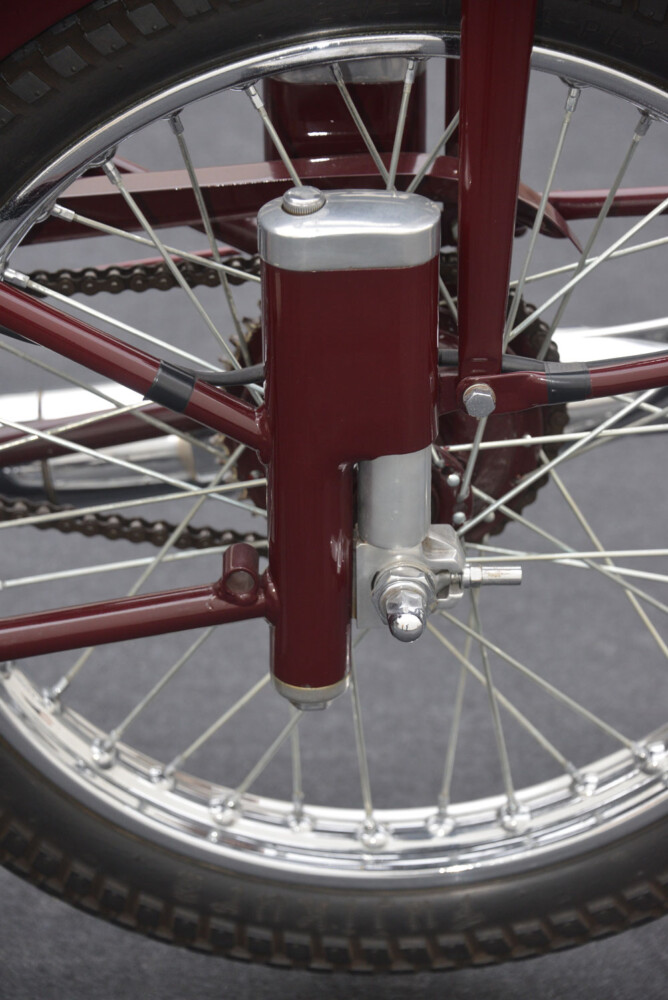
The chassis of the new YA-1 was also more sophisticated. Up front sat a fairly robust telescopic fork, with the sliding section sealed from moisture and dirt by rubber gaiters. Most ultra-lightweights of the time used rigid rear suspension, although the post-war DKW RT125 used plunger suspension, with the moving parts lubricated by grease.
The YA-1 plunger rear suspension.
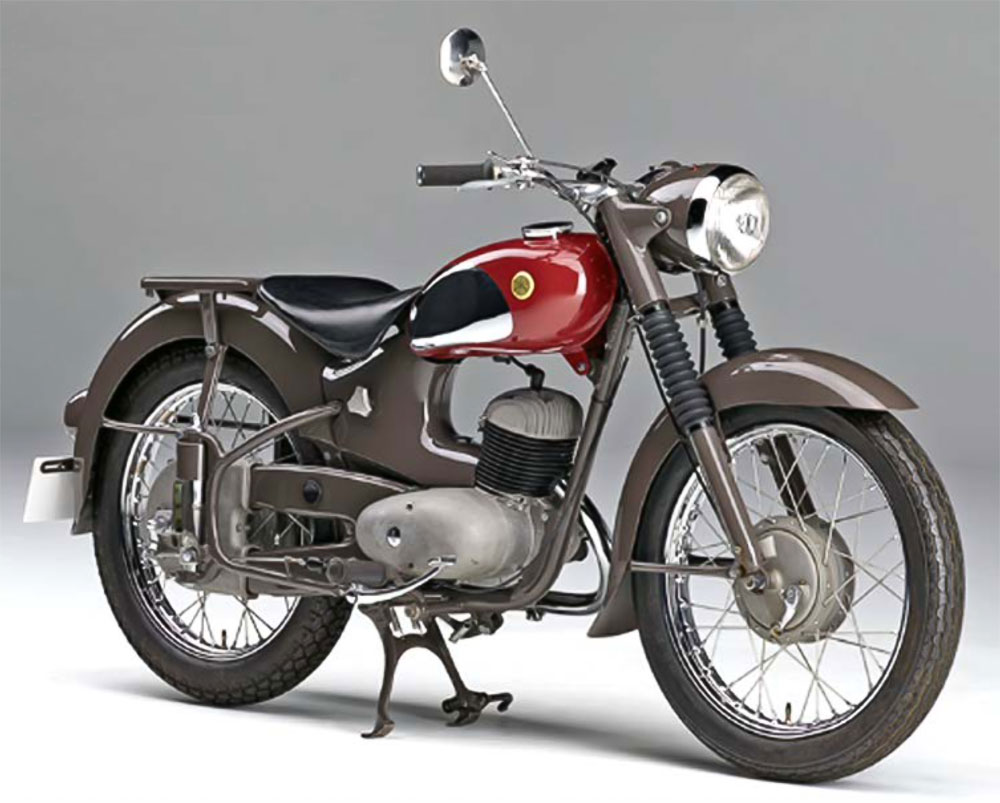
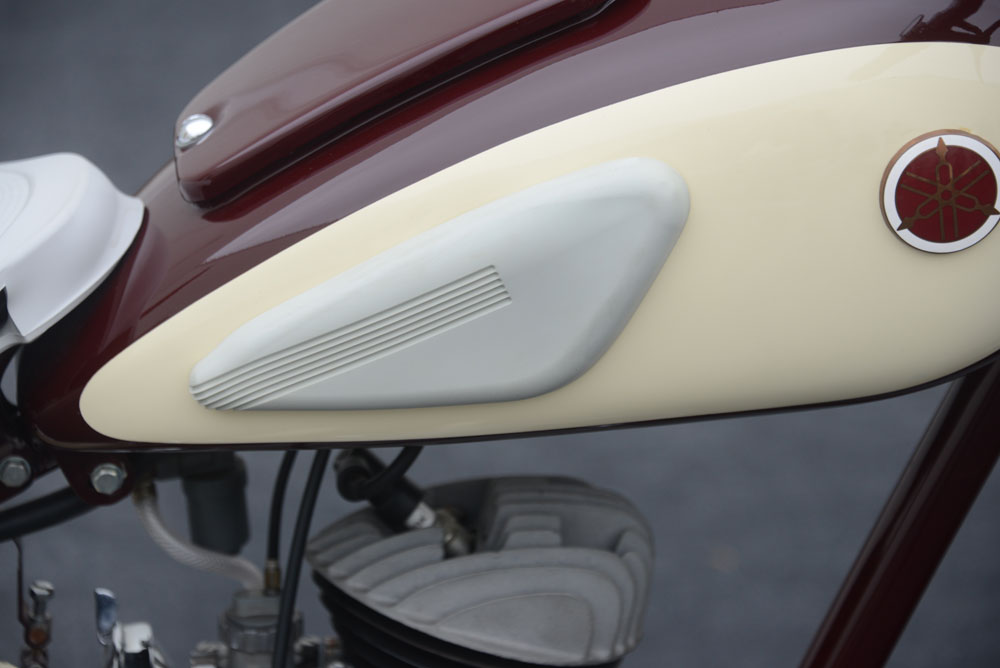
The YA 1’s rear suspension was fully lubricated by a sealed oil-bath system. In an era when virtually all Japanese motorcycles were finished in black, the YA-1 sported a rather stunning chestnut red and cream finish, earning it the sobriquet of the Akatombo, or the Red Dragonfly.
There was no name on the tank—just the triple tuning-fork emblem that had been Nippon Gakki’s symbol for over 50 years. Discreetly, the name Yamaha—in honor of the company’s founder—was embossed on the contact points cover on the right and the primary transmission cover on the left.
In February 1955, 200 of the new machines were produced in the Hamamatsu factory. On July 1, the motorcycle business was officially separated from the parent company and renamed the Yamaha Motor Company, with Genichi Kawakami as founding president.
The new YA-1 was the most expensive motorcycle on the Japanese market, and sales terms were cash only. Initially, sales were sluggish. A team of sales representatives, riding Red Dragonflies, were sent out all over Japan to set up a dealer network for retail sales and service, with the brief to convince dealers and customers alike that a piano manufacturer could in fact build a seriously good motorcycle. In an era when the average starting salary of a college graduate was around 10,000 yen, the YA-1’s 138,000 yen price tag put it well beyond the reach of most aspiring clients, but once the dealer network became operational, sales were healthy.
Strutting Its Stuff | Celebrating Yamaha’s First Product
Like Honda, Yamaha believed the best way to publicize its products was in competition, although motorcycle racing was in a very embryonic stage, with no real circuits to speak of. The most prestigious event was the hillclimb titled the Mount Fuji Ascent Race (first run in 1953 and won in 1954 by Honda). It was a timed sprint on rough, unsealed tracks that began near the base of the volcano and finished well up the steep slopes. The rules strictly demanded that the event be open to production motorcycles only, excluding one-off racing specials. Performance-enhancing mods were allowed, provided the machine basically retained its stock appearance, so Yamaha’s technicians were able to tweak things internally to boost the standard figure of 5.5 horsepower at 5000 rpm, with maximum torque of 6.9 lb-ft at 3300 rpm.
Proving his product. Genichi Kawakami (right) inspecting the Asami course with the YA-1 team.
Testing had shown that the Yamaha exhaust muffler sapped power, so a new version, modeled on the DKW, was produced. Yamaha’s team for the Mount Fuji climb consisted of 10 riders, who practiced from dawn until dusk before the event. The field contained 49 entries from 16 different manufacturers. A secret weapon, revealed only once the event was underway, was a mobile dynamometer, which allowed Yamaha technicians to fine-tune carburetion to cope with atmospheric conditions and altitude.
Riders left the starting line in pairs at 30-second intervals, and when the dust settled, the winner of the 125cc class was Yamaha’s Terou Okada in a time of 29 minutes, seven seconds.
Significantly, pre-race favorite Honda was pushed into second place, and six more Yamahas were in the top 10. It was an emphatic victory, celebrated across the country by the new Yamaha dealers.
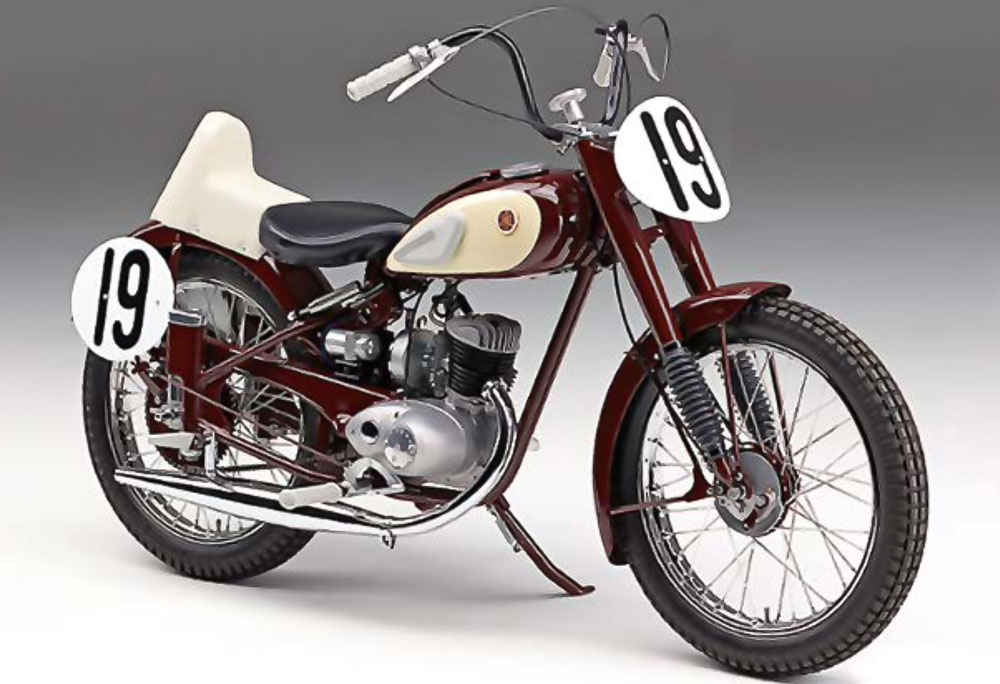
Four months later came a new contest, the Asama Highlands race, which was a four-lap race on a 12-mile course, which started at the base of Mount Asama, reached a point at what was called Asama Ranch, then headed back down again. For the inaugural event, the volcano was still smoking after its latest eruption. With the YA-1 squad now aboard more powerful versions, with distinctive racing-style seats and ultra-high handlebars, Yamaha once again vanquished archrival Honda to take the first four places, with Noboru Hiyoshi leading them home.
Sales Success | Celebrating Yamaha’s First Product
The competition successes electrified the buying public, and customers flocked to the showrooms. For 1955, 2272 examples of the Red Dragonfly were built, with production of the model continuing until 1957.
To cash in on the success of the 125, an enlarged 175cc version—the YC-1 (basically an exact copy of the DKW RT175)—was rushed into production. Uncharacteristically, however, the engineers made an error in retaining the exhaust system from the 125, which proved to have inadequate gas flow in the silencer, stifling performance. Yamaha responded by sending every available service person out to YC-1 owners wherever they lived. Armed with a hammer and punch, they simply belted holes into the liner inside the silencer, fixing the problem. With 10.3 horsepower on tap and a top speed of 60 mph, the 175 was appreciably quicker than the 125. Significantly, the YC-1 featured the first Japanese-made monobloc carburetor.
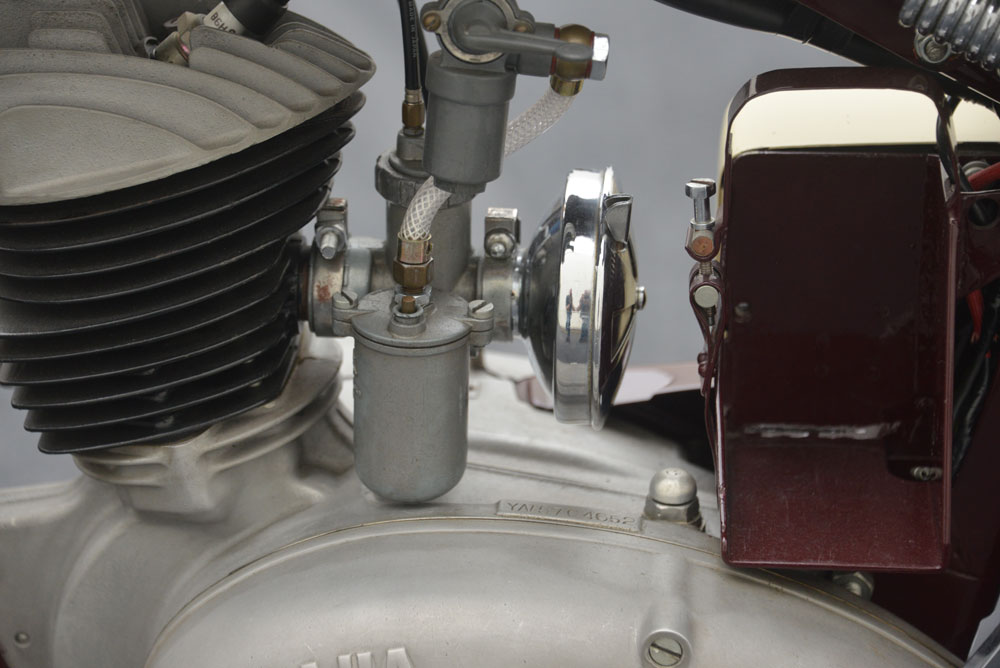
Japanese-made Amal carb.
Once again, Yamaha turned to competition to prove its product, and the 175 lined up alongside the 125 at the 1957 Mount Asama hillclimb, with both models winning their classes. Once the 175 was in full production, Yamaha achieved its next target of producing a total of 1000 units per month along with the YA-1.
For its second race outing, the YA-1 in the modified trim in which it appeared at the first Asama Highlands Race in November 1955.
At about the same time, Yamaha surprised everyone with the release of the YA-2, which was a completely different motorcycle compared to the YA-1. The engine was basically the same (except for the left-side crankcase cover, which was now a more angular shape) but had been tweaked to produce one more horsepower. A new-style monobloc carb was fitted in place of the earlier remote bowl type.
First shown at the Tokyo Motor Show in April 1956, the 175cc YC-1 boosted production (along with the YA-1) to over 1000 units per month.
The big difference was in the chassis. Instead of the original tubular steel frame was a pressed steel frame, made from two halves, welded together. Front suspension was leading link, with a much larger and more powerful front brake. At the rear was a modern swinging-arm suspension controlled by two spring/damper units. Weight increased from 207 pounds to 228 pounds, but the economies achieved in the chassis redesign permitted a price drop to 125,000 yen.
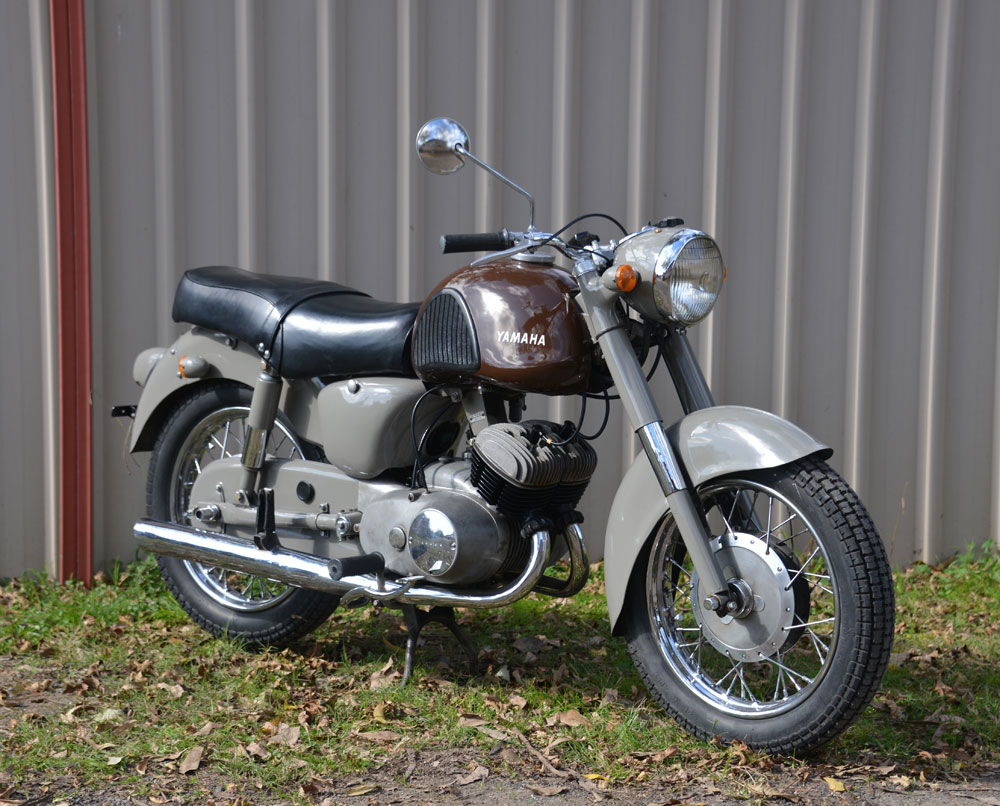
Missing from the YA-2 was the original red color that had given the YA-1 its Red Dragonfly nickname, replaced with somber black with a rather ugly chrome-plated fuel tank. Considering the tooling costs to produce the YA-1, the creation of the YA-2 so early in the piece was a surprise. However, many feel that Yamaha wished to break away from the notion that the YA-1 was just another DKW replica, along with the BSA Bantam, Harley-Davidson Hummer and several others. The YA-1 was dropped in 1957, and in 1959, the YA-2 became the YA-3, which was identical except for the addition of an electric starter.
Twin Time | Celebrating Yamaha’s First Product
Also in 1957, Yamaha delivered a king hit with the introduction of the YD-1, a twin-cylinder two-stroke that was an immediate success and set the scene for the following generation of twins that really propelled the company on the road to international fame.
Unlike the 125 and 175, the YD-1 was a substantially original design, although the engine had its origins in the Adler MB250. Originally, the plan had been to simply duplicate the Adler similar to what had taken place with the 175 DKW, but the design engineers put forward such a strong case to Kawakami that he authorized them to make their own decisions. The result was not particularly attractive, but it was distinctive.
The engine retained the 54mm x 54mm bore and stroke of the Adler, with vertically split crankcases that required the crankshafts to be built up in each crankcase and then splined together. A four-speed gearbox was used, with the power unit providing 14 horsepower at 6000 rpm. Twelve-volt electrics and a standard push-button electric starter were practical inclusions that made good marketing sense, and turn signals front and rear were also standard equipment. Despite its appearance, the YD-1 weighed in at only 304 pounds, which was quite light for a 250 twin.
The YD-1 frame was a combined tubular steel backbone with pressed steel components. Telescopic front forks—along with swinging-arm rear suspension with twin shock absorbers, a first for Yamaha—were used, with 16-inch wheels front and rear. The unusual humpy shape of the fuel tank, which was finished in brown, earned the new 250 the nickname “Bunbuku Chagama”—the “tea kettle.”
The 1957 YD1, Yamaha’s first twin.
Kawakami again took to the saddle for a two-day shake-down test from Hamamatsu to Tokyo, where it was presented to the media. It wasn’t exactly smooth sailing, however, as an engineering glitch over the method used to couple the right and left crankshafts resulted in a recall of about 3000 motorcycles—a mightily expensive business but a move that Yamaha president Kawakami deemed absolutely necessary to maintain the company’s absolute commitment to customer satisfaction. The pressed steel chassis YD-1 lasted only a year or so before a completely revised YD-2 version appeared in December 1958 with a tubular front downtube, lighter mudguards and a larger fuel tank with chromed side panels.
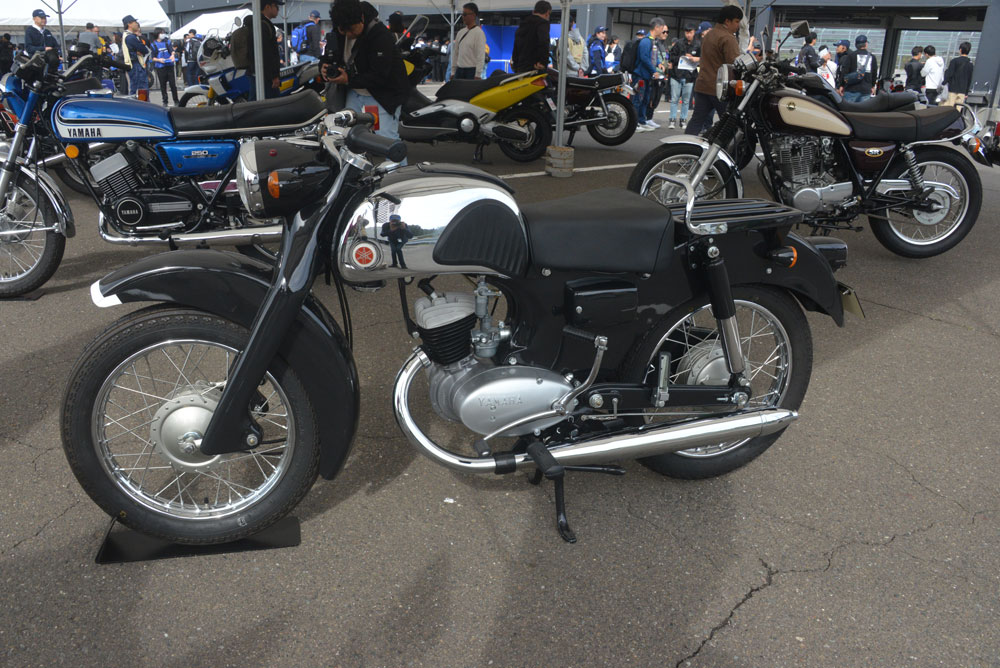
The YA-3 on display at Sugo.
Today, these nascent models represent the cornerstones in the company’s transition into one of the powerhouses of world motorcycling. The chance to see these models in the flesh was one of the highlights of my visit to Japan this year to experience the celebrations of Yamaha’s 70 years in the industry. The visit culminated in a day at the Yamaha-owned Sugo track in northern Japan. While there, it was a pleasure to meet Yamaha Motor Corporate Communications Manager Bob Starr, who e-introduced me to Bob Weaver, as you will read here in the sidebar below.CN
A YA-1 Fan Stateside
As can be expected after 70 years, few examples of the YA-1 exist, and of these, New York State Yamaha dealer Bob Weaver has not one, but two of the seminal models. He explains how this passion came about.
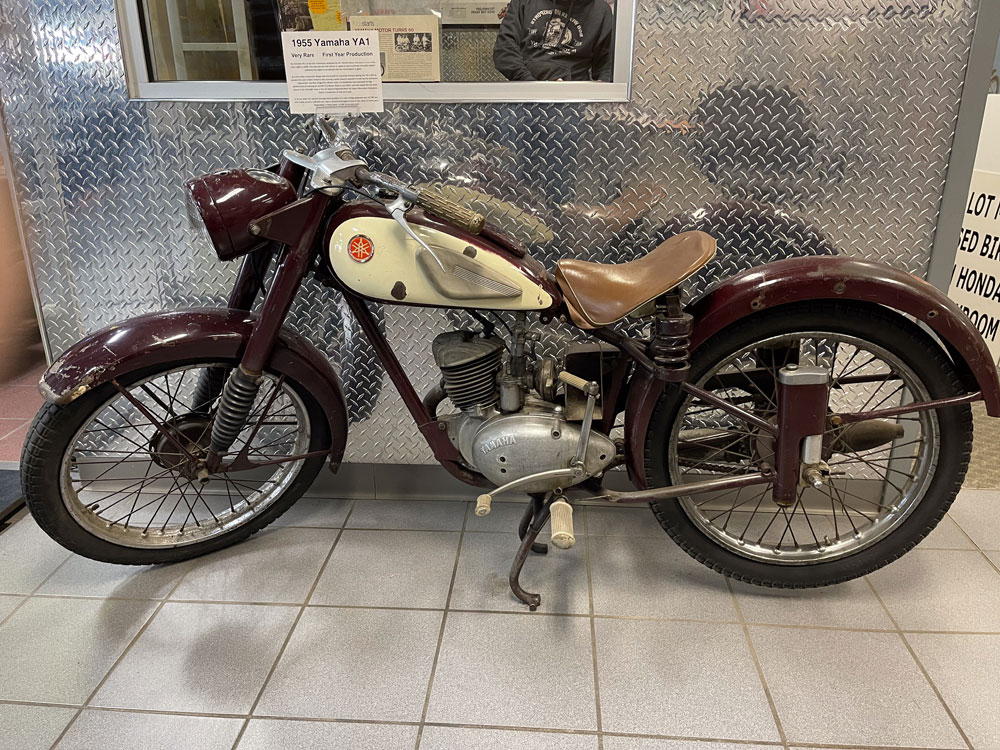
The ex-UK YA-1 outside Bob Weaver’s office.
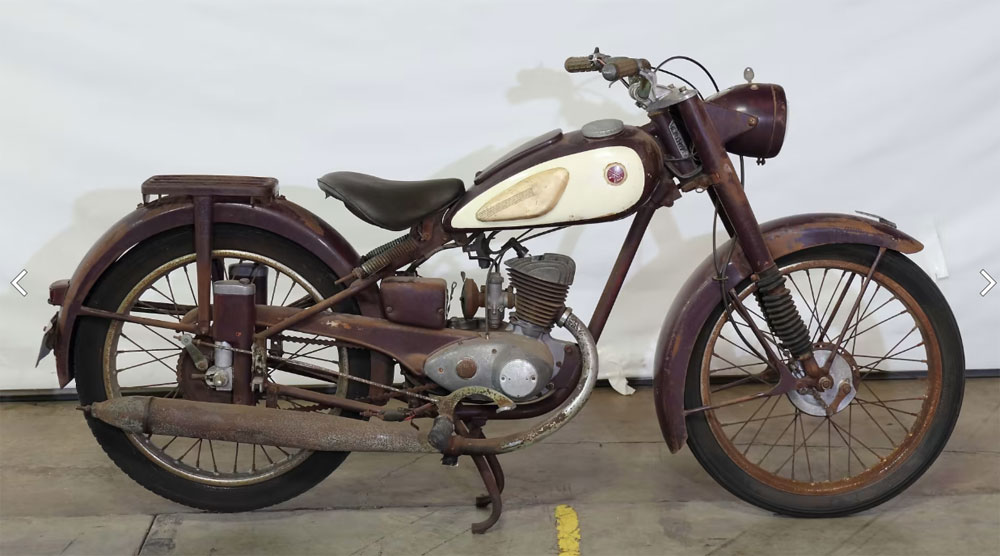
“I’m an avid motorcycle enthusiast. I’ve ridden, collected and restored motorcycles for 60 years. I’ve been a dealer for 55 years. Over the years I’ve sold Hodaka, Montesa, DKW, Husqvarna, Maico, Suzuki, Honda, Yamaha, Buell, Ducati and others. I bought my first Yamaha YA-1 from Tamworth Yamaha in the UK in May 2008. I was looking to buy an original R7 from them, and I saw the YA-1 in the background in the photos they sent. I asked if it was for sale; we struck a deal on both bikes and off to the U.S. they came. That YA-1 proudly sits outside my office window, showing the history of the first Yamaha motorcycle. The second YA-1 I have is being restored. I purchased it in January 2019 at the Mecum Auction in Las Vegas.”
The YA-1 bought by Weaver at the Mecum Las Vegas auction in 2019.
The restoration of Bob’s second YA-1 has been made slightly easier because of Yamaha Motor’s decision to remanufacture a batch of the original white rubber components for the footpegs, gear lever, handlebars, knee rubbers and seat.
Bob Starr with Yamaha YA-1 Rubber Parts Set ReproductionUnique white rubber knee pads.
As luck would have it, Bob Starr, a good friend of Bob Weaver, was in Japan for the Yamaha 70th anniversary celebrations and was able to personally collect the prized parcel and bring it home, ready for installation.