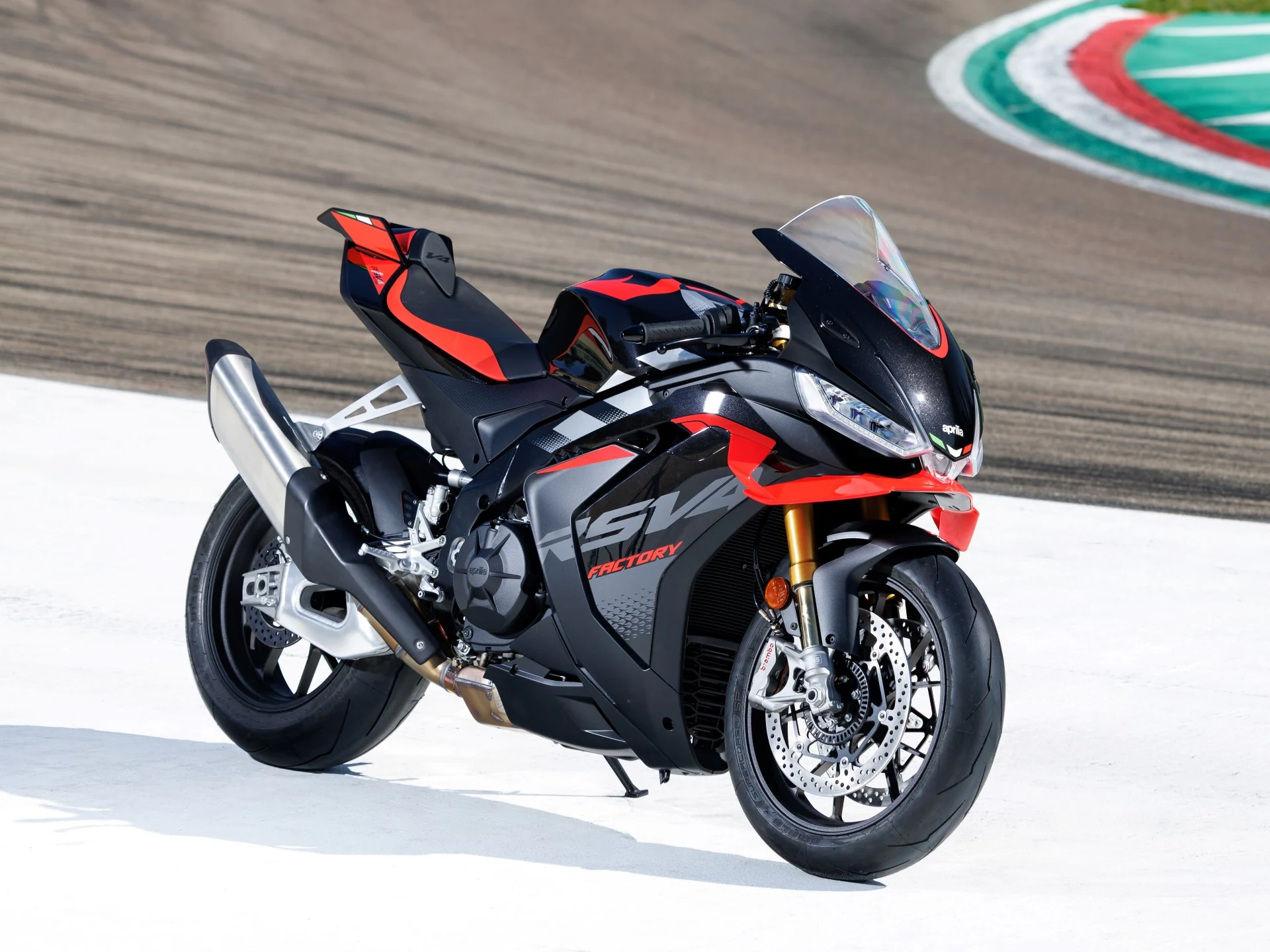
Aprilia has released the first production motorcycles that can have their electronics altered via GPS.
The 2025 RSV4 and Tuono V4 Factory editions, in conjunction with the Aprilia MIA app, allow for corner-by-corner changes to the bike’s eight-level traction control, three-stage wheelie control, and three-stage engine braking parameters, as long as you set the limits yourself.
The system works by you selecting a circuit in the MIA app (hopefully Aprilia has your circuit loaded within the app, if they haven’t, you’ll have to get in touch with them to get them to do so). Then, you individually select the various levels you want at a given point of the racetrack.
For example, let’s take Laguna Seca, which is already loaded in the Aprilia MIA system. Coming into the tight turn two, you might want full engine brake (level three) to help pull you into the apex, level four traction control for a controlled, fast exit, and level two wheelie control.
At the fast turn five, you might want less engine brake, so you preselect level one, with TC now at level two and wheelie control at level one to try and get as much power to the rear wheel as possible to get the drive up the hill.
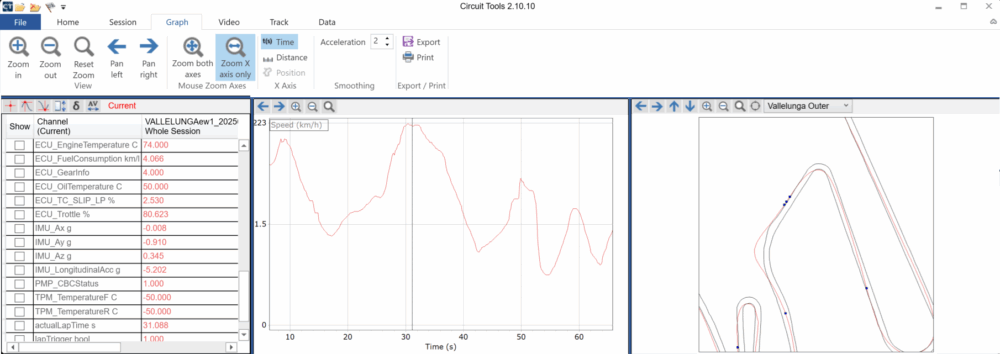
After your ride, you can then export the data in a vbo format, which is compatible with professional analysis software from Racelogic.
If all this sounds familiar, it should be. Aprilia actually had GPS-controlled electronics available to the customer back in 2021, but you needed a separate GPS module you bought from Aprilia to enable the corner-by-corner function.
The 2025 RSV4 and Tuono V4 Factory editions only require you to Bluetooth your phone to the bike for the system to work. And, best of all, you can leave your phone in the pits and you’ll still have the corner-by-corner system active.
And should there be an issue with the GPS system, the APRC will revert to the basic traction control, wheelie control and engine brake control you already had saved in your dash.
All this is an evolution of the Aprilia Performance Ride Control (APRC) system that debuted back in 2010, marking Aprilia as the third manufacturer to fit traction control to a production motorcycle behind Ducati and BMW.
Aprilia were actually the first to use a basic IMU in the 2011 RSV4, but the Piaggio marketing department were somewhat silent on the massive bragging rights available from the revolutionary system.
KTM were the first to run a full six-axis IMU in 2014 on their 1190 Adventure but Yamaha were the first to have the full six-axis IMU fitted to a sportbike with the 2015 YZF-R1. Ducati followed suit that same year with the 1299 Panigale.
Much of this technology has come from Aprilia’s experience in WorldSBK and MotoGP, even though MotoGP stopped using GPS for traction control intervention back in 2016 with the advent of the control ECU. Dorna had actually banned the use of GPS units supplied from outside companies at the end of 2010, with the MotoGP commercial rights holders implementing a control GPS unit for the next five seasons.
Either way, this is the first time a production machine has implemented traction control that’s controlled by GPS. Ducati’s Data Analyzer and Yamaha Y-TRAC systems both have GPS capabilities, but they have no effect on the bike’s internal componentry—they can tell you exactly where you are on the track but can’t mitigate how much traction control you’re allowed to have. Just like the Aprilia MIA app, the Ducati and Yamaha systems will let you know your brake pressure, lean angle, throttle position, traction, slide and wheelie intervention, etc. Expect these systems to come out with GPS-fettled electronics in the coming years, sooner rather than later.
Until now, Aprilia holds the cards in the GPS game. They have done so since 2021, but now it’s all done via your phone and not through extra modules you need to buy at the dealer.
For more Aprilia news and reviews, click here

