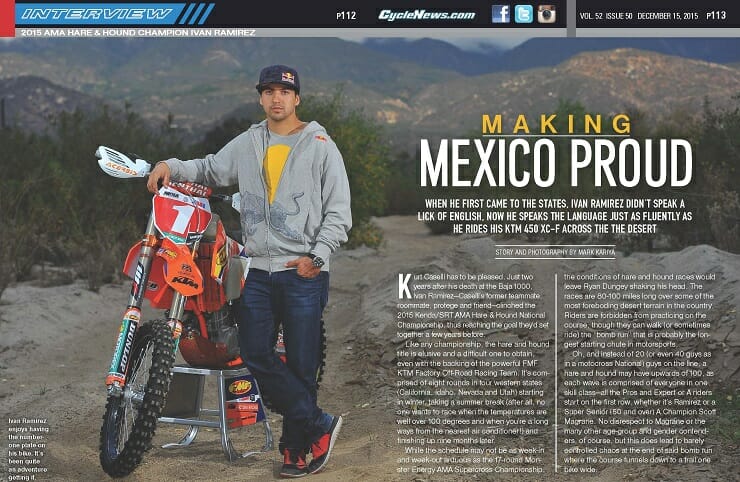
Photography By Mark Kariya
When he first came to the States, Ivan Ramirez didn’t even speak a lick English, now he speaks the language just as fluently as he rides a KTM 450 XC-F across the desert
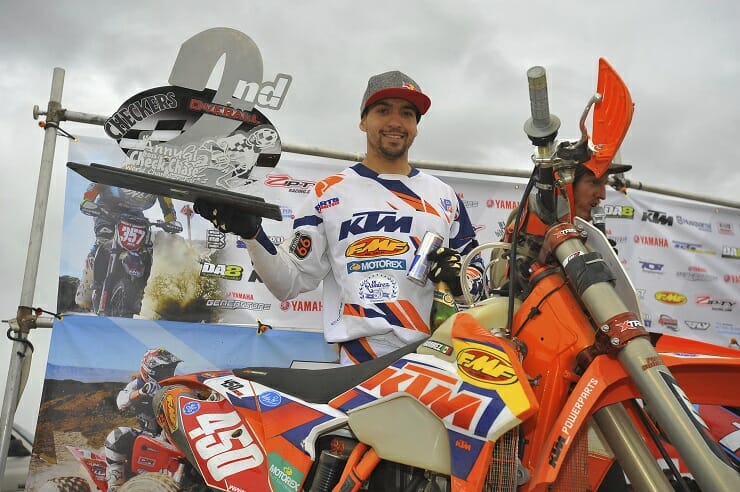
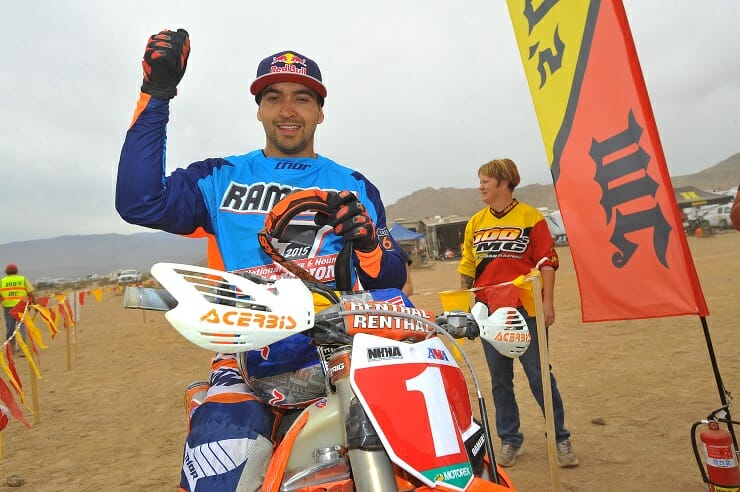
Kurt Caselli has to be pleased. Just two years after his death at the Baja 1000, Ivan Ramirez—Caselli’s former teammate, roommate, protégé and friend—clinched the 2015 Kenda/SRT AMA Hare & Hound National Championship, thus reaching the goal they’d set together a few years before.
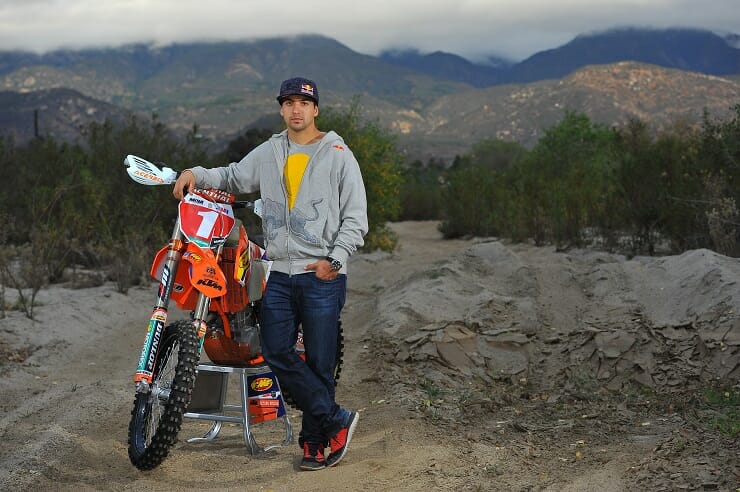
Like any championship, the Hare & Hound title is elusive and a difficult one to obtain, even with the backing of the powerful FMF KTM Factory Off-Road Racing Team. It’s comprised of eight rounds in four western states (California, Idaho, Nevada and Utah) starting in winter, taking a summer break (after all, no one wants to race when the temperatures are well over 100 degrees and when you’re a long ways from the nearest air conditioner!) and finishing up nine months later.
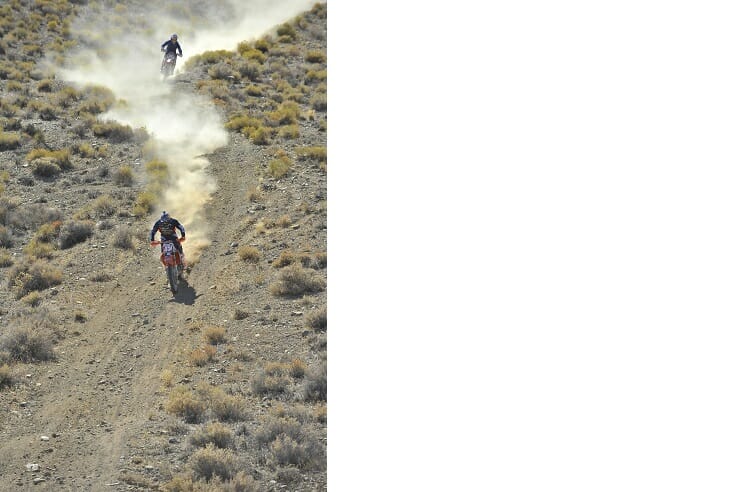
While the schedule may not be as week-in and week-out arduous as the 17-round Monster Energy AMA Supercross Championship, the conditions of hare & hound races would leave Ryan Dungey shaking his head. The races are 80-100 miles long over some of the most foreboding desert terrain in the country. Riders are forbidden from practicing on the course, though they can walk (or sometimes ride) the “bomb run” that is probably the longest starting chute in motorsports.
Oh, and instead of 20 (or even 40 guys as in a motocross National) guys on the line, a hare & hound may have upwards of 100, as each wave is comprised of everyone in one skill class—all the Pros and Expert or A riders start on the first row, whether it’s Ramirez or a Super Senior (50 and over) A Champion Scott Magrane. No disrespect to Magrane or the many other age-group and gender contenders, of course, but this does lead to barely controlled chaos at the end of said bomb run where the course funnels down to a trail one bike wide.
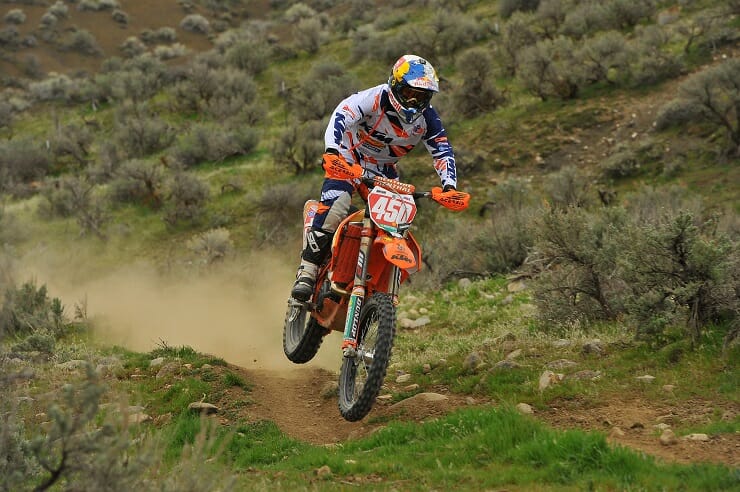
Once on that trail, riders have to stay on their toes practically the whole way. Remember, they’re not allowed to practice on the course so every rock, G-out, rain rut and drop-off is going to be a surprise. And if they’re not anywhere near the front like Ramirez and company, chances are that they’ll be enveloped in a wall of dust that Superman’s X-ray vision could barely punch through.
It kind of makes you wonder why anyone would do it.
Yet this is the arena where the world’s top desert racers thrive and do so with far more limited resources than Dungey, et al.
So why would a young man from Mexico want to pursue a career in the U.S. chasing a dream with such limited reward versus the huge risk?
To find out, we caught up with Ramirez, who speaks far better English than I do Spanish, just before he took his brand-new 2016 KTM 450 XC-F for a shakedown at Pala Raceway, not far from his American home in Temecula, California, (which is, conveniently, close to KTM North America headquarters).
First of all, what is your background?
I’m 22 years old; I’m from Ensenada, Baja California, [Mexico], and I’m currently living here in Temecula. I started riding when I was five years old; my dad bought me my first bike, which was an XR50 from 1988. I grew up racing down there, like local motocrosses, then my dad got my first little KTM [50cc] Senior when I was still 5, maybe a few months after he got the first bike for me. So I grew up riding and racing a little bit down there and did a couple Baja races like [the] Tecate [enduro], just fun stuff. That’s how I got involved with bikes.
How did your racing career get started?
Just from being down there, we used to go watch the Baja races, watch the start for the trucks and watch the bikes go by. That’s how [I got to where] I wanted to race Baja and race dirt bikes. We started racing motocross here in the States when I was still 5, close to 6. We raced 50s, 60s, 80s, then I jumped to the 250cc four-stroke when I was 11, 12—I was a big kid (laughing). I grew up racing a lot at Barona Oaks down near San Diego, like lots. We used to go, like, three times a month. We also did the Mini Worlds in Vegas, maybe five years in a row. In ’07 I raced my first [SCORE race, the San Felipe] 250 with just my buddy from down there in Ensenada. It was just for fun, just to go out and check it out. I think we got fourth in Class 21 (250cc Pro). At the Baja 500 and 1000, some local guys from Tijuana invited me [to be on their team] and we won Class 21; we got the 100X plate in ’07. By then I was 14 years old when I did my first Baja 1000. My dad had to sign a waiver saying I was responsible for everything. It was a big thing. He even tells people now, “What was I thinking? I was crazy because I let him race!” My last section at the 1000 was from San Ignacio all the way down to Loreto, and I got the bike at 2 in the morning. I don’t even remember what time I got to Loreto, maybe 5 in the morning or something like that! I remember I was still a little kid—I was 14 years old! I remember I was by myself in the middle of nowhere and racing. I remember seeing the cactus as monsters and stuff! I was afraid; I’m not going to lie. Somehow, I got lost by El Datil and I was there by myself. From far away, I saw a bike coming by; I could see the lights so I waited for him because I was just sitting there and didn’t know where to go. So I followed him for a little bit and I got to Loreto, but my dad, he was like, “What was I thinking?” That was ’07; since then I got a little more into the Bajas and I kind of had my own team with my dad supporting me with just local riders. We invited Shane Esposito [to be on the team] one or two times, I think, and [Mikey] Childress. We got more into it and switched to Class 22 (Open Pro) and I got a little help from [many-time Baja age-group winner] Chris Haines—he was providing me bikes—and that’s pretty much how my career started down there. I wasn’t doing any more motocross; I’d pretty much made the switch to off-road. I was doing WORCS here and there in the Pro 2 class.
What does your dad do for a living? He has a trucking company, correct?
Yes, it’s a family company that’s been around for 51 years now. My grandparents started it in ’65. My dad keeps asking: “Hey, when are you going to come back and work here?” I have four sisters; three of them work there plus my uncle. It’s a full-time family business. At least I have the option I can always go back and keep with the family company when I feel it’s the right time to retire from bikes. But now, I’m full 100-percent focused on riding and racing!
Do you know how to drive a big rig? Do you have a commercial driver’s license?
Not yet. I’ve driven just right there; I’ve parked the trailers, but I haven’t gone out to the highway yet. It’s a big job, for sure; I’ll be nervous! Sometimes when I have to drive the motorhome to the races, I send pictures to my dad and say, “Hey, look what I’m driving! I might be ready!” He just makes fun of me.
When you were younger and racing at Barona and other American tracks, was it much of a hassle to get across the border?
It was pretty crazy. When I was in junior high, my mom used to pick me up from school because there used to be a track in El Cajon (just east of San Diego) and it was open at nights on Tuesdays and Thursdays. My dad would stay at work and she would take me there pretty much every Tuesday and Thursday—go after school and ride and train and then head back to Ensenada. We were only like—with the border crossing—maybe an hour and a half from there. It wasn’t too, too bad, but still, we’d go there then come back at night, just back and forth. We crossed so many times, I can’t even count them! I can’t thank my family enough for being there for me and still they’re supporting me in a long career in racing. They believe in me and I feel like the whole racing [thing] was a way to keep the family close. I remember my sisters used to come with me and go to the races, and I know they wanted to be at the mall or having fun or doing some more girly stuff, but most of the time they were there [at my races]. It was just cool.
When did you start riding for KTM and when did you start riding full-time in the U.S.?
I did a couple Bajas with David Pearson; I think it was 2010. We did the 500 and 1000. After that, in 2011 I rode for KTM Mexico; I was doing national enduros down there and won the E1-class championship. That’s when they started talking to [KTM North America Off-Road Team Manager] Antti Kallonen. Being from Baja and racing with Pearson, that gave me a little advantage. In 2011 I was doing some WORCS here and there. In 2012, that’s when RPM [Racing’s Mike Hurlbert] picked me up. I did the Pro 2 class in WORCS and won the championship in the Pro 2 class and 450cc A. At that time I had my contract with the KTM factory for Baja races with Kurt [Caselli] in 2012. I think in 2011 we did the San Felipe 250, Kurt and I, and we had some issues with the bike and DNFed. In 2012, that’s when we went down as a full factory effort.
You actually lived with Kurt at his place in Palmdale, so you could train like he did and learn from the best?
It was ’12, just after the 250. I remember he texted me—I was at my dad’s and he sent me a text: “Hey, you want to move in with me?” I’m like, “Sure, why not?” At that time I was living with Brandon Prieto and Eric Yorba. So I told my dad and he said, “Yeah, why not? It’ll be really good for you!” We got really close, riding and training all the time together. It was just a fun two years, for sure. Riding for RPM in the WORCS series, I knew I had to be here in the U.S. and just train a little bit better and get more serious about my racing. That’s how it started.
Living with Kurt had to help you improve tremendously because you’d be seeing firsthand what the best did every day.
That was probably the best decision of my whole career. I never thought I would be this far in my career [with an AMA National championship]. I’d always wanted to be a pro motocross racer, but as soon as I moved in with him, my level started going up and up. He was the best in the sport. Literally anything he’d do, he’d go to win it. Just learning from the best, I feel like you can get a bit of that and carry it with you. He taught me a lot of stuff and showed me how to accomplish things. He wasn’t afraid to give all his secrets up; he would always help and give anything.
What was the main thing you think you learned from him?
Just being more serious about the sport. He was really, really serious about his racing. Anything he’d have to do to win, he’d do it. He wouldn’t second-guess it; he’d just go do it. If it was training or going to ride or whatever, being really organized and focused on racing, that was the main thing.
How much did you have to change your program to match his?
Completely, 100 percent. I jumped on his full program, from riding, cycling, gym and swimming and everything, and the way I was eating. I was on a diet for a long time. I believe whatever worked for him had to work for me—and it did, for sure.
Changing your diet must’ve been really hard!
Yeah, coming from [Ensenada], the food’s really good! And I was chubby back in the day and I was happy. I’m happy now, too! But I had to cut a lot of food from my diet, for sure, and at the same time I feel really good on the bike now, and feel better and better. It’s just the first step. Once you’ve done it for a couple months, you’re fine.
When you first started racing here full time, did you imagine yourself getting to this level?
No, not really. I wanted to be a top guy, for sure, but I never thought it would be this soon. I just worked really hard. I believe working hard is the way you’ve got to go and it’s the same in any business or in life. If you don’t work hard, you might not get what you want. I’ve been working really hard and training and believing in myself. It all worked well.
What was the most difficult thing to learn, coming from Mexico to racing here?
The level up here is way higher than in Mexico. Once I did the national enduros down there, Homero Diaz, he’s at the top level and he’s fast, but if I wanted to be on the next level, I had to move up here and learn from the best riders and get that intensity and that level. Just like in my whole career, all I’ve been wanting to do is take it step by step in improvement and not just take a big step forward and go two back—just being smart. I want to have a long career and take everything step by step.
Moving to another country presents a lot of challenges, with simply communicating being one of them. Since English isn’t your first language, how difficult was it to learn?
When I first moved up here, I didn’t know any English. I learned the basics in school a little bit; I’d learn a little bit here and there as I spent more time here. I wasn’t able to communicate that well with the mechanics at first and all the KTM guys. It was hard for me. Just writing e-mails, it was a big change for me. It’s a different way to live life here than down there. When I moved in with Kurt, that’s when I had a big step [forward] with my English. He didn’t know Spanish; I didn’t know English. I could barely communicate with him and he could barely communicate with me, too, so I had to learn. Just from listening to English and being around people that speak English all the time, I got it pretty quick, I think. I’m still learning English. There’s things I say wrong or something, but I’ve always been the kind of guy if I say something wrong, I won’t get embarrassed and I want to learn. I ask, “What does that mean?” and keep improving. I still want to learn one more language. I don’t know what. I want to learn three languages and learn to communicate with more people. I love when Americans try to speak Spanish and I try to help them. I like when people want to learn more languages. There are people that know seven or eight languages. I’m like, “How do you guys do that? That’s just crazy!” Two for now is good.
Does anyone else in your family speak much English?
My sisters, they do a little bit. The oldest one, she speaks really good English and Spanish and a little bit of Chinese.
What’s the highest level of education you’ve gone through?
High school [in Ensenada]. I was going to go to college, but right after high school is when Kurt asked me to move in. My dad, he wants me to have a title (college degree) and a career, and he asks when I’m going to go back to school. At some point I have to go back to school. He’s like, “Before you go into the business, you have to have your title and you’ll be welcome.” That was one of the deals we did once I became a racer; he was like, “Okay, I’ll support you in whatever you need. But you’ve got to get a title after you’re finished racing.” I want to go back to school when I have time. Like right now, I’m 100-percent focused on my racing. It’s hard, training and being stressed with school. It might not be the right time right now, but for sure I’ll go back and do it later.
You won the Hare & Hound Championship more than a month ago. Has it sunk in yet?
It’s huge. When I grew up, I always raced Baja and I had a lot of experience down there, and it took me a while to get used to the racing in the States, especially the hare & hounds. It was high intensity and not getting to pre-run to know what you’re hitting. It was very hard. It took me a few years to get used to it. When I first started, I was back in the pack [and thinking], “I should be pretty good. I’m used to racing in the desert.” But it’s a whole different racing mode. It’s huge for my career. From the beginning of this season, it was a good battle with [defending series champ] Ricky [Brabec] and [my teammate] Gary [Sutherlin]. The points were back and forth, and it was really fun. It makes you push a little harder. They had some injuries and I just wanted to be consistent—that was my main goal from the beginning of the year. Don’t make any mistakes or crash and you’ll be fine at the end of the year so I just wanted to be smart, and I’m happy with the title. For sure, it’s a big step in my career.
Having a Mexican citizen win an American championship must’ve been huge back home.
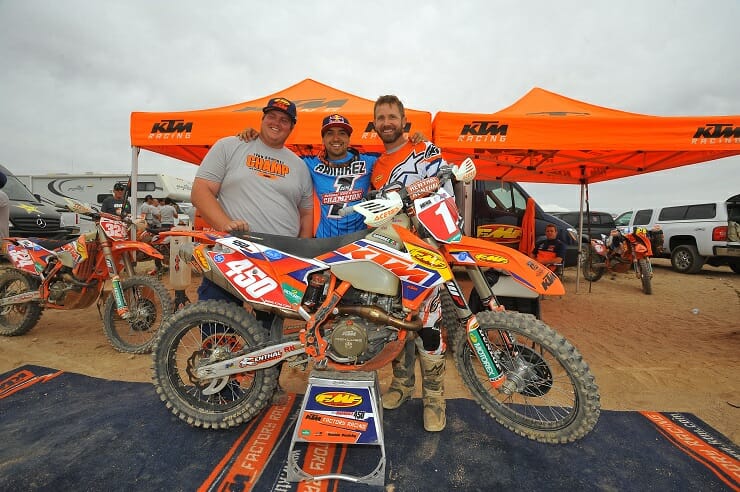
Yeah, I was getting calls and texts from everybody; they were all really happy. The Red Bull guys and all my main support from Baja and racing down in Mexico, when I won that, they were super pumped. They have big banners now in the city. When I saw the banners, I was like, “Wow, that’s cool!” I was the Athlete of the Month in Ensenada. It’s cool seeing all the stuff; it really motivates me and keeps me going, for sure. All the fans and all the kids down there, they’re like, “Hey, congrats for your number one!” It’s just cool. I love all the people and racing, and getting to impact more people makes me really want to keep going more and more and keep improving.
Next year, you’ll be riding the hare & hounds again, of course. Will you be doing anything else?
I have 10 additional events in my contract besides the hare & hounds. I’ll choose what I want to do. It’ll probably be a combination of WORCS or AMA West Hare Scrambles or local AMA District 37s—something that I can choose. But the main focus is hare & hounds.
How difficult do you expect it to be defending the number-one plate?
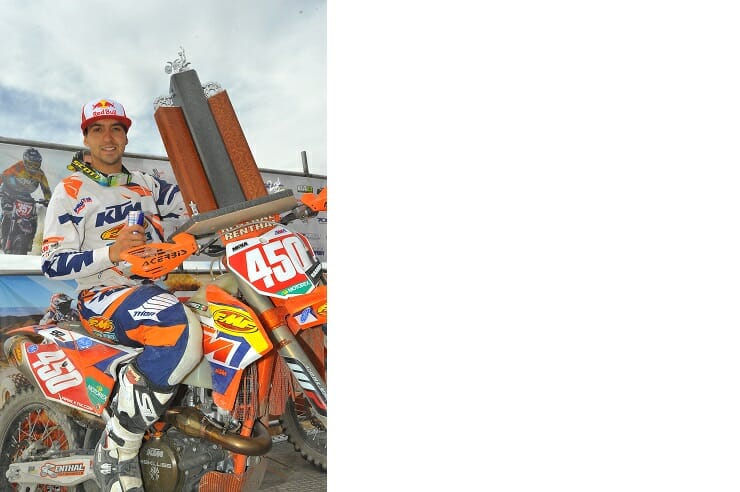
It’s going to be a good battle, for sure. We’ll have four good riders and we’re pretty close. They’re all great riders and racers. I’ve been working really hard and I feel confident that I’m going to be stronger than this year. This year, I had an injury, too, and I wasn’t able to ride for two months. The new 450 XC-F is really good. It’s amazing and it’s going to be a better package with the bike, and my body’s also better. My training’s a little bit higher level now so I’ll defend the title for sure.
Will you ride the ISDE again for Mexico?
Yes! We’re actually working on getting the bikes dialed in for Spain ahead of time. Usually, we just show up and rent the bikes. They’re good bikes and they’re raceable, but just being comfortable with the linkage, my own practice bike or race bike from the States, it’s going to be a big change for us. The whole Mexican team and KTM from down there and the people, they’re excited about Six Days. Slovakia was pretty good for us, for Eric and me. I’m excited for that; we’ve got to help these kids out. This year will be my last year on the Junior World Trophy team and I want to do good; I want to be one of the top Junior guys there so I’ll keep training for that, for sure.
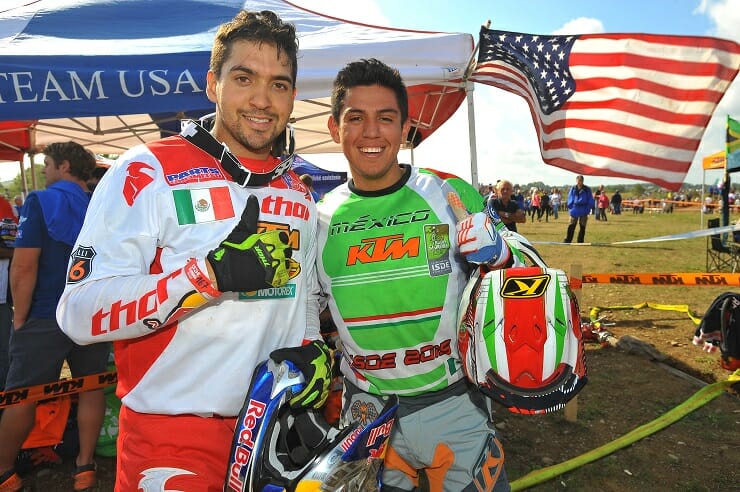
For most of your practice, do you mostly do motocross or go out to the desert?
I do both. I try to make it fun. I love making my training fun, not just going and going and going to the same thing every time. You get tired of it otherwise, the same as work somewhere eight, nine hours a day doing the same thing all the time—you’re over it. I try to have good balance in my training and riding. I go moto and I go trail riding and have fun or just go ride and not train, just mess around—go over logs or whatever; keep it fun.
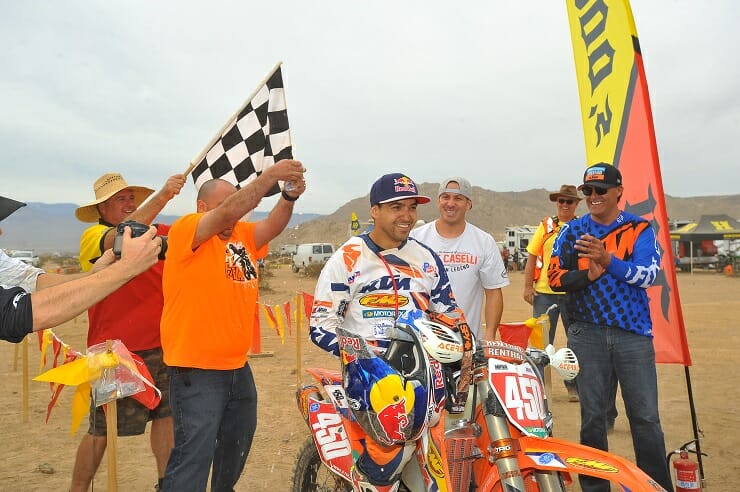
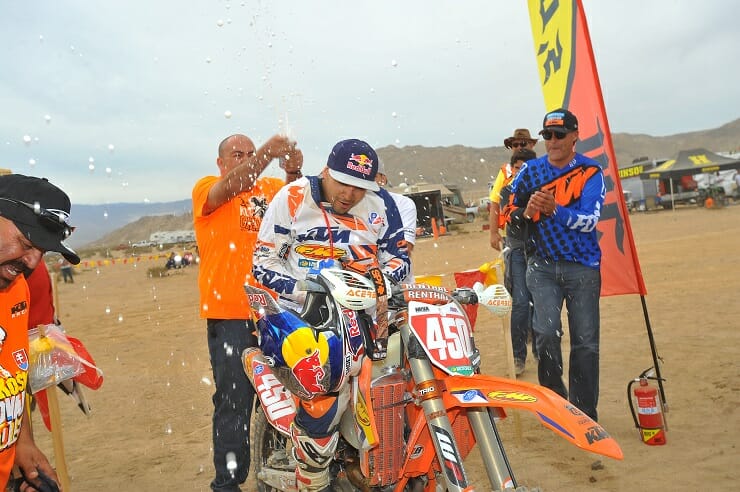
You went down and spectated at the latest Baja 1000. Are you still interested in racing in Baja?
For sure, 100 percent I want to go back and race there. Watching it from the outside and another perspective, the whole race is pretty crazy. It’s different seeing it from down there as a spectator rather than being on the bike. It’s really hard to control lots of people along hundreds of miles of remote racecourse, especially when the race goes down the whole peninsula. I believe the Kurt Caselli Foundation is going to do big things. They’re already doing big things and making a lot of progress. Once it’s safer, we’ll go back. As I told Antti, I keep asking him, “When are we going back? You know I want to go back; I’m ready to go back and get the 1X plate for Kurt. “I don’t want to go down with another brand or whatever. I want to go back with KTM and whenever you guys are ready and think it’s safe, I’ll be down there with you guys. If it’s in one year or two years or whenever, I’ll wait for you guys. I want to do it on KTM and dedicate it to Kurt.” That was one of our main goals as a team. I know and I believe that KTM and us, we can do it.
Your girlfriend is Kelsey Abbott. How is it having five-time AMA National Hare & Hound Champ Destry Abbott so close to you now?
It’s awesome! He’s a great, great guy. I love the whole family; they’re really cool and like a family we’re really close.
You can read the original magazine story by clicking HERE.