The European brands rule the two-stroke off-road world. When Japanese manufacturers turned their backs on two-stroke development several years ago, companies like KTM, Beta, Sherco and Husqvarna seized the opportunity and found their niche in the enduro market, producing top-tier two-stroke-powered off-road bikes, focusing on 250 and 300cc engines with emphasis on the 300s. Most 300s have become the choice for hard-core off-roaders and hard-enduro specialists for their torquey engines and rideability.
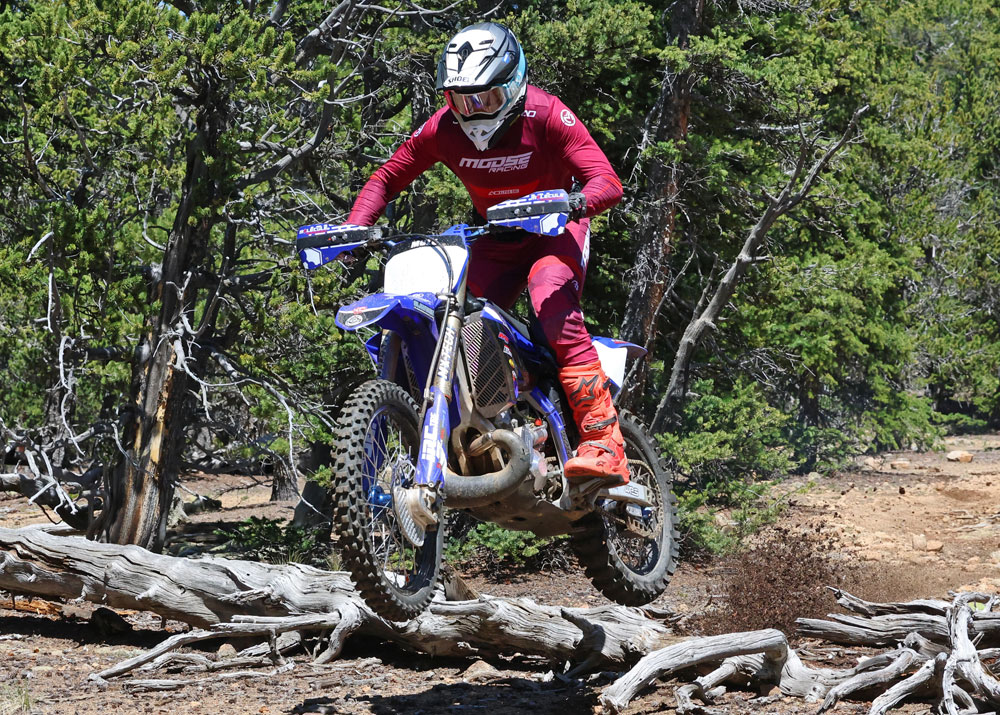
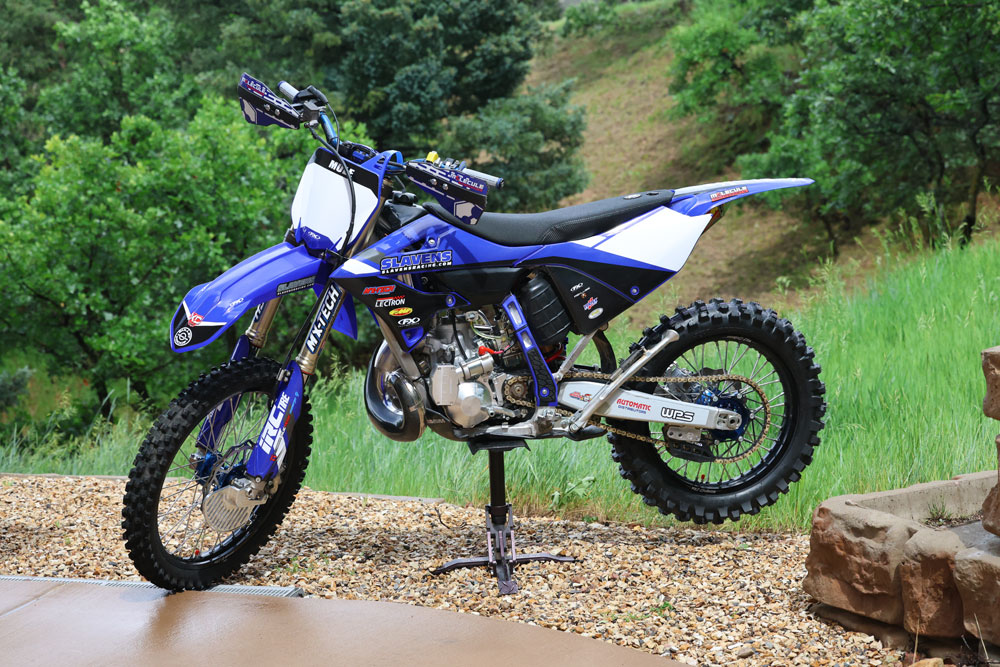
But what if Japanese brands still made two-stroke off-road bikes? Would we now have an RM300, a KX300, or a CR300R? What about Yamaha, which thankfully still invests in two-strokes with its line of YZ125 and YZ250 motocross and YZ125X and YZ250X off-road bikes? Would there be a YZ300X off-roader by now? How cool would that be? Well, our friends at Slavens Racing wanted to know and built their own YZ300X. And they gave us a chance to ride it! Slavens Racing, which calls Colorado Springs, Colorado, home, focuses on offering top-end off-road parts and accessories and only sells parts they’d put on their own motorcycles.
Starting Point | Slavens Racing Yamaha YZ300X Review
To save on cost, the Slavens crew found a used 2016 YZ250X as its starting point. 2016 was the first year for the YZ250X, the first production Japanese two-stroke off-road bike in decades. Since then, the YZ250X has seen updates, but at its core, it’s still the same bike.
Once the teardown began, the wish list kept growing, and the bar was raised very high: to create a KTM killer, since the KTM 300 two-stroke is considered by many as the benchmark for all 300s. Slavens ended up going all-out on their project. No stone was left unturned, but for the sake of space, we’re going to focus on the major changes, like, of course, the engine.

Get To Work | Slavens Racing Yamaha YZ300X Review
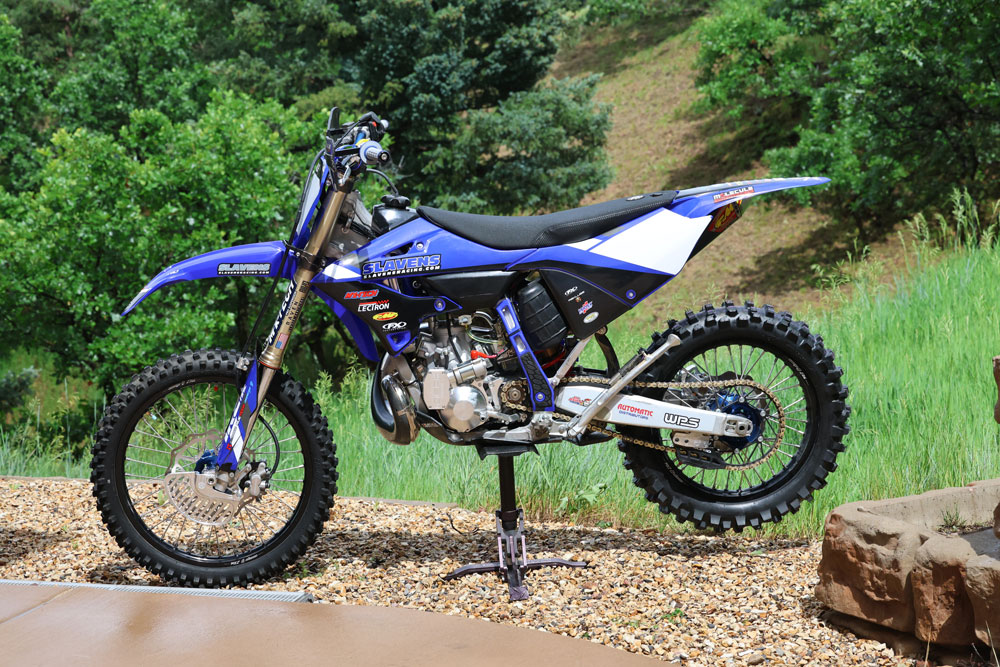
To compete against a KTM 300, like the XC (cross-country) or XC-W (enduro) models, the YZ250X’s cylinder had to be punched out, so an aftermarket big-bore kit from Cylinder Works was installed. The retail price of the kit is just north of $1000. Not cheap, but at least it’s an easy bolt-on operation that includes everything you need: a nickel silicon carbide-plated cylinder, a Vertex piston, rings, gaskets—all that stuff. Total displacement is bumped to 295cc from 249cc with the new 72mm piston. The YZ’s 72mm stroke was not changed, so it now has the same 72mm x 72mm square bore-and-stroke configuration as a KTM 300. There’s a slight bump in compression, too.
The Slavens boys could have stopped there, but no. To complement the big-bore kit, they installed a re-mapped Vortex ignition, replaced the stock Keihin PWK38S carburetor with a 38mm Billetron Pro carburetor from Lectron, swapped the OEM reed block with Moto Tassinari’s V-force reeds, and installed an FMF Fatty exhaust and Turbinecore 2.1 silencer.
You might wonder why the carburetor swap. Tunability, says Slavens. With the Lectron, Slavens likes that you can independently fine-tune fuel delivery (via its metering rod, torque jet and power jet) across the powerband, from idle/low throttle to full throttle, and they say the Lectron provides more consistent fueling over a wide range of conditions, without frequently re-tuning the carb like you might need to with a PWK.
Again, they could’ve stopped there; instead, they wanted to supplement the YZ’s manual kickstarter system with a push-button electric system, like most off-road motorcycles have now. They chose an electric-start kit from Fisch Moto, the same unit Cody Webb uses on his hard-enduro YZ two-stroke. This all-in-one bolt-on electric-start conversion kit requires some open-heart surgery and is another significant investment at around $1000 in parts alone. But, again, the kit includes everything you need, including a battery. The entire system (with battery) adds nearly 10 pounds to the bike’s weight, but the convenience of push-button starting is well worth it, in our opinion. Of note, when you visit Fisch Moto’s website, you’ll see in bold red lettering that its starter-conversion kit is not recommended for big-bore kits. However, Slavens reports no issues with their bike.
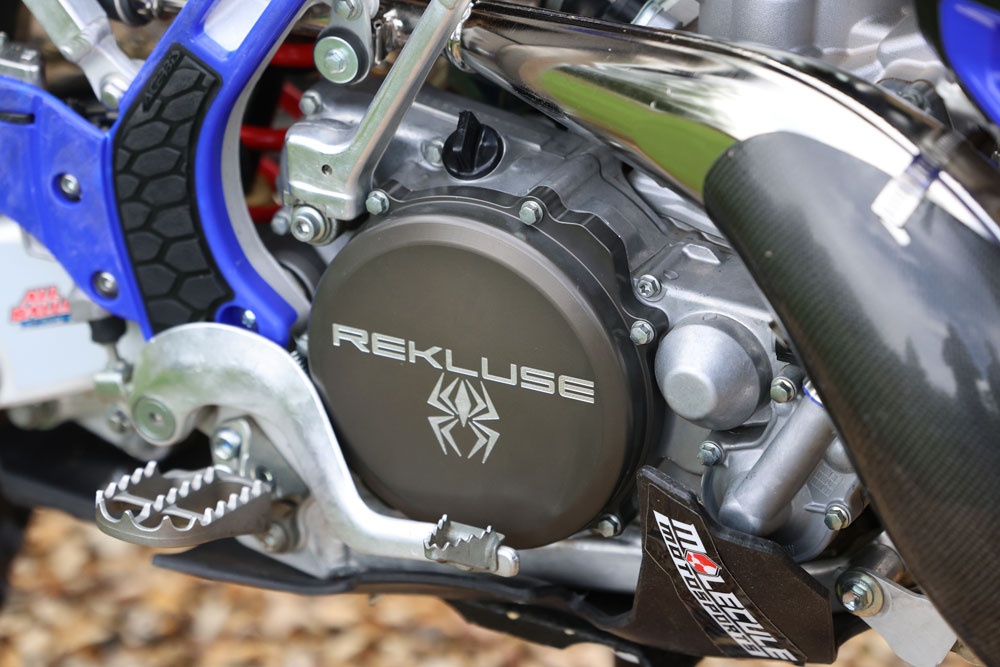
Slavens also replaced the stock clutch with a Rekluse Apex (manual) clutch system. The 10-year-old Yamaha probably could’ve used a new clutch anyway, and with the increased power and torque now, it makes sense to upgrade the bike’s clutch. It’s not a cheap upgrade at $1199, but it’s a wise one.
Again, Slavens could’ve applied the brakes to the project here, but again, no. Next up, suspension. The YZ250X already has a solid suspension package from the factory, with KYB forks and shock. As good as these components are, Slavens wanted a more trail-friendly package and installed the fully adjustable Slavens Mule MX-Tech Raven closed-cartridge-system fork, tuned specifically for spirited off-road use. In the back, a one-pound-lighter MX-Tech National Shock, featuring a hard Kashima (body) coating and a slippery DLC (shock shaft) coating, replaced the stock shock, which, like the fork, is tuned for the trails and fully adjustable. The fork and shock mods are by far the costliest of this build, with the fork retailing for $1620 and the shock for $2640.
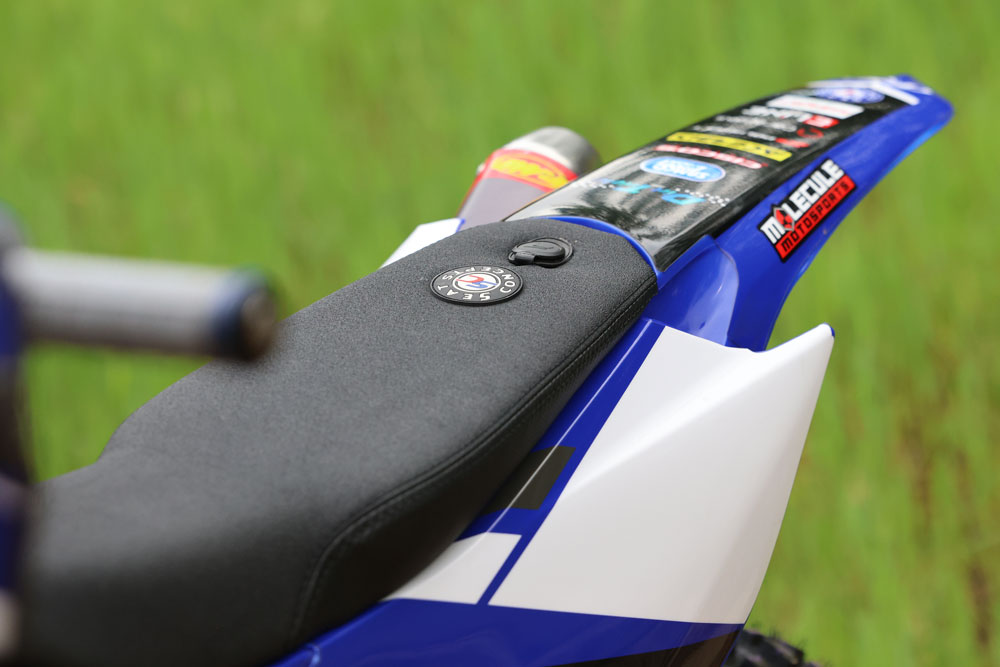
The rest of the upgrades mostly involved keeping the bike protected and the rider comfortable. The bike we rode was fitted with a Seat Concepts Comfort seat, an adjustable Mako 360 handlebar mount, and extra-thick handguards from Molecule Motorsports. As for protection, the bike was fitted with an E-Line carbon-fiber pipe guard, and Bullet Proof Designs was responsible for protecting just about everything else.
The bike also featured Warp 9 full wheelsets and IRC tires.
The finishing touch was Polisport’s Restyle Kit, which gave the 10-year-old Yamaha a modern look and feel.
Going For A Ride | Slavens Racing Yamaha YZ300X Review
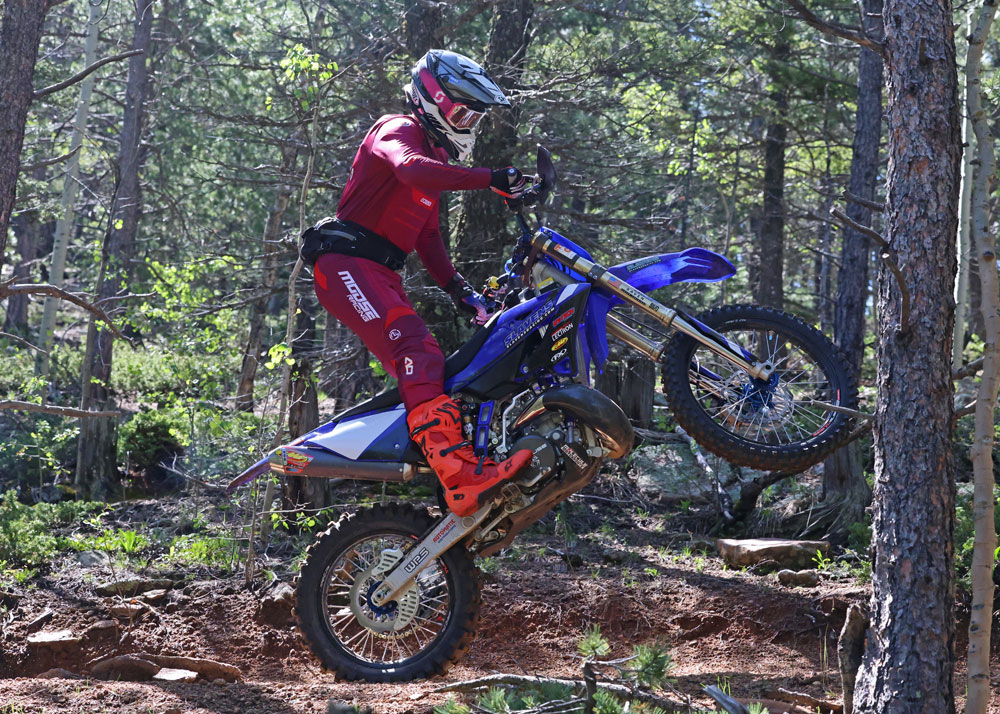
I traveled to Colorado Springs where the Slavens Racing headquarters is located and headed for the hills on the Slavens Racing Yamaha YZ300X. I was immediately impressed with the bike in many ways. The motor wowed me most. You can easily feel the boost in power and torque compared to the stock engine; gone is that high-strung “racey” feel, making the bike more comfortable and rideable on narrow trails, where precise throttle control is so critical. I loved its ability to lug when the trail turned technical, which is what makes riding a 300cc two-stroke so desirable in the first place. Overall, the bike felt plenty powerful, even at this altitude, approximately 6100 feet.
Some of the credit goes to the Lectron carburetor, which felt crisp and clean, even at low rpm, with the throttle cracked. Had you told me this bike was fuel injected, I would not have given it a second thought.
A huge improvement was the electric push-button starter, which felt weird using to get a blue two-stroke Yamaha started. The system performs just as you’d expect from any other e-start bike, while still having a manual starter for backup. Nice. And the starter system seemed reliable and made no scary noises. It felt as though it came fitted from the factory, though it didn’t look that way. It’s not exactly pretty to look at, but it also makes a good conversation starter.
The MX-Tech suspension gives the YZ an “enduro” feel, that is for sure. The stock suspension leans a little on the stiff MX side, while the MX-Tech fork and shock have a cushier, trail-friendly feel. The Slavens team set up the bike for my weight and experience before I even got there, and I felt right at home on it from the get-go, never making any changes.
KTM Killer? | Slavens Racing Yamaha YZ300X Review
Maybe not a killer, but definitely a threat, especially if you’re already a Yamaha “guy” or just enjoy or are used to that feeling of a Japanese motorcycle beneath you. If that’s the case, then this build might be perfect for you. It’s a solid alternative to orange (and red, white and blue for that matter), but not necessarily a cheaper alternative, depending on which route you go. We calculated the cost of all the essential and perhaps nonessential parts in this big-bore build, which totals over $20,000 (gulp!). However, when focusing on just the meat and potatoes of this build—the engine—we’re talking about a more manageable five to six grand in parts. And that’s not too bad if you already own a YZ250 or YZ250X and just want to upgrade to a 300cc two-stroke for the trails without spending big bucks on a whole new bike, like an $11,000 KTM.CN
2016 YZ250X Project Bike: Parts List
| Cylinder Works Big-Bore Kit | $1106.65 |
| Lectron 38mm Billetron Pro-Series Carburetor | $749 |
| Moto Tassinari V-Force 4X Reeds | $158 |
| Fisch Moto E-Start | $1090 |
| Samco Radiator Hose Kit | $168.90 |
| Vortex X10 CDI | $599.95 |
| Rekluse Apex Clutch | $1199 |
| FMF Racing Fatty Pipe | $299.99 |
| FMF Racing Turbinecore 2.1 Silencer | $269.99 |
| Polisport Restyle Kit | $494.99 |
| Slavens Mule MX-Tech Raven Fork | $1620 |
| MX-Tech National Shock | $2640 |
Click here to read the Slavens Racing Yamaha YZ300X Review in the Cycle News Digital Edition Magazine.
Click here for more Yamaha motorcycle reviews and news.