The Fun Machine
We take a box-stock motocross weapon and turn it into a tarmac-shredding supermoto racer.
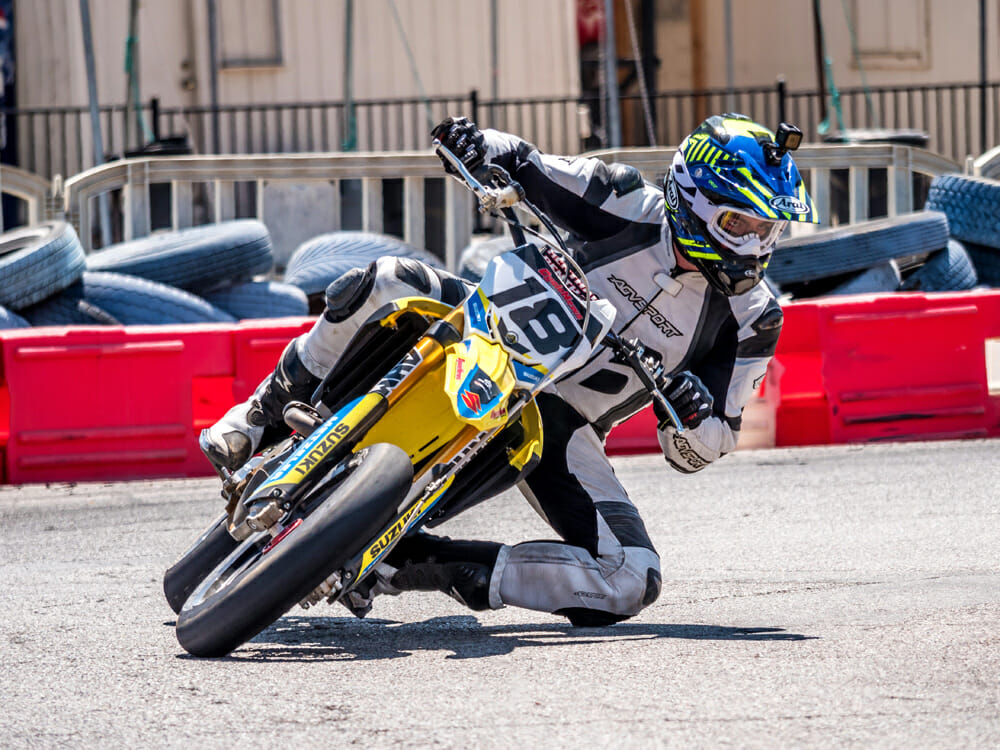
Supermoto racing is one of the most exciting things you can do with your clothes on. It’s a perfect mix of road racing, flat track and motocross, each discipline required at one point or another during the lap.
Over the past few years, we’ve built a couple of supermotos, but those have essentially been just throwing some wheels and brakes at a Suzuki RM-Z450. All we did were a few track days, as the pace of Cycle News life meant we could hardly get a free moment to go racing, much less develop a steed that could handle it.
Photography by Rennie Scaysbrook and Karen E. Ott
Click here to read this in the Cycle News Digital Edition Magazine.
For 2018, we had a new Suzuki RM-Z450 sitting around the office, and, since a year ago, we moved right next door to the gurus at AHM Factory Services, we decided to build another bike. Only this time we would finally get into the suspension and go racing for real to see how we stacked up.
The Suzuki has been a bit of a conundrum of recent years; finishing towards the tail end of the last couple of motocross shootouts we’ve done here at Cycle News. For me, that doesn’t matter a damn, because I can’t ride motocross anywhere near any of the current crop of 450cc bikes’ limits, so the Suzuki is plenty fine for me.
The last Suzuki RM-Z I built for supermoto had the air fork, one that was comprehensively slammed by the MX testers we used. Now, I didn’t mind the air fork when doing track days in supermoto guise as the smoother, slower action of the suspension on a supermoto track compared to motocross didn’t upset the bike anywhere near what the MX testers tell me.
That was last year, and for 2018 Suzuki changed back to a new spring fork that made it easier to get into and mess with so we could dial in a medium setup that could easily be changed back to standard when it was time to give the bike back.
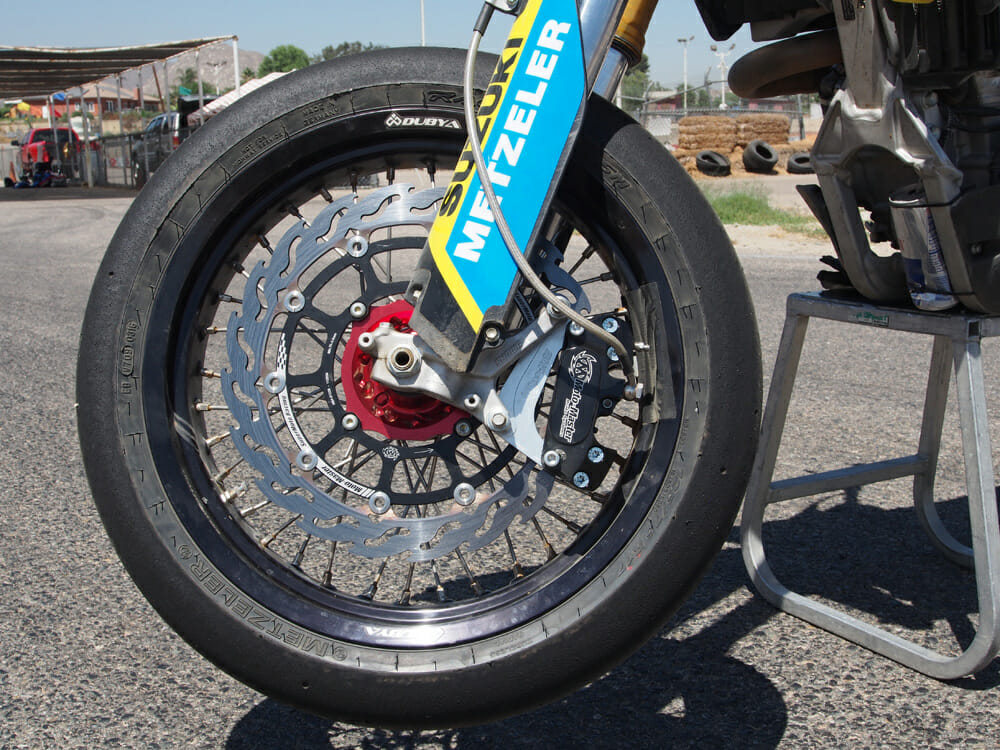
We had a few parts left over from our previous supermoto build, including the 17-inch Dubya rims laced to Talon hubs and Motomaster front-brake setup, and fitting the two meant about two hours gone out of the day.
Previously, we had used Bridgestone’s V01F slick tires for our rubber, but this wasn’t the optimal setup, as they are primarily a full-on road-race tire. The carcass of this tire is quite stiff, so doesn’t perform as well as some other rubber on the market (including Bridgestone’s own supermoto tire that at the time we didn’t have access to).
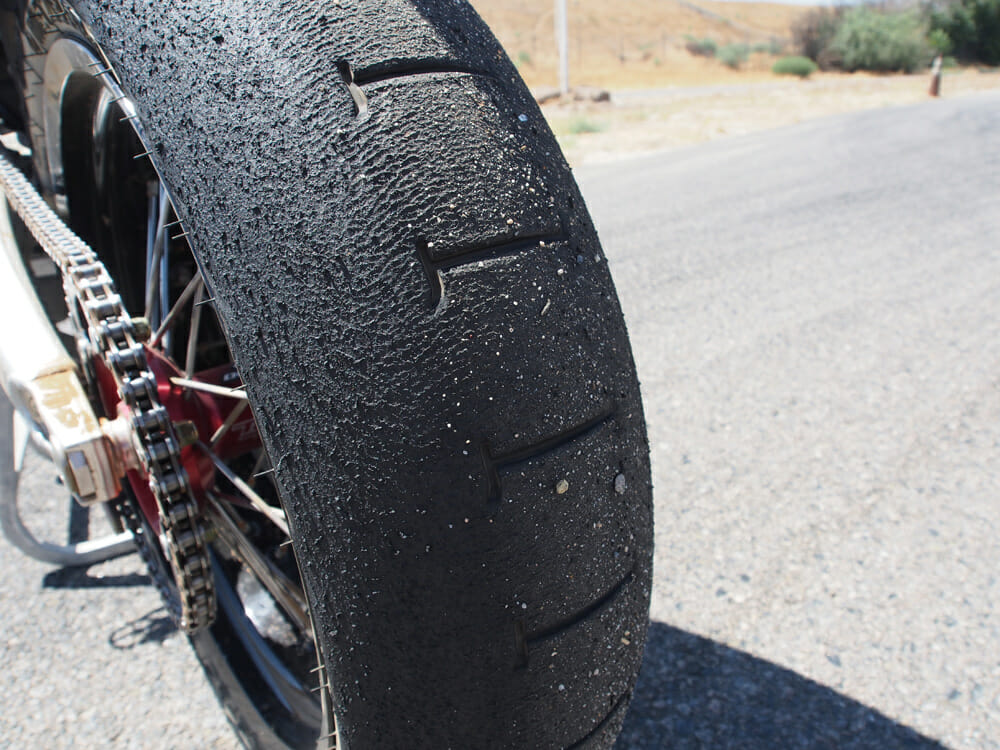
To fix this, we opted for a set of Metzeler Racetec SM tires in a soft compound, which is ideal for the normally baking-hot conditions we practice in at Adams Kart Track in Riverside and Apex Kart Track in Perris. These tires have been nothing short of outstanding. They have been on the Suzuki for nine months and have gone through God knows how many heat cycles and still give the kind of performance that’s more than enough for me and my level of riding. The Metzelers have a super-soft compound and give you loads of feedback as they compress and spread out into the turn, making you feel like the contact patch is about two feet wide. I love this rubber.
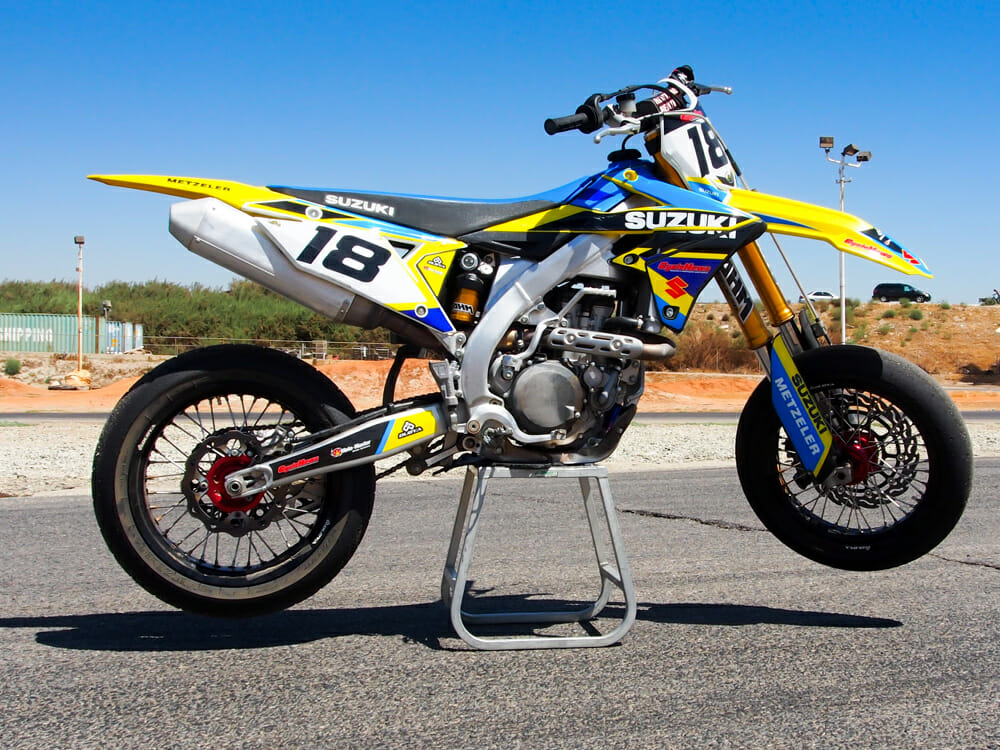
We also gave the bike an all-new look, with Rad Graphics delivering some superb Cycle News blue-and-yellow graphics that made our little home-brewed supermoto look almost factory. I’m terrible at getting graphics installed on the bike, but these ones went on with hardly any bubbling and the aesthetic speaks for itself.
Off to AHM
Brandon Petersen from AHM Factory Services is an extremely busy young guy who has built an excellent company with his buddy Justin Lewis. Located in Yorba Linda, California, AHM is responsible for building some sweet motocross, GNCC, Hare & Hound and Baja race bikes, and when I told Brandon we were finally going to get into the suspension on the RM-Z, his eyes lit up.

Brandon made a name for himself building flat-track bikes and understands the nuances of suspension across different forms of racing, so the RM-Z was a bit like going back to his roots.
The idea was that we wanted this to be a very basic, cost-effective build, one that could easily be switched back to a standard motocross setup later in the year when we gave the bike back to Suzuki.
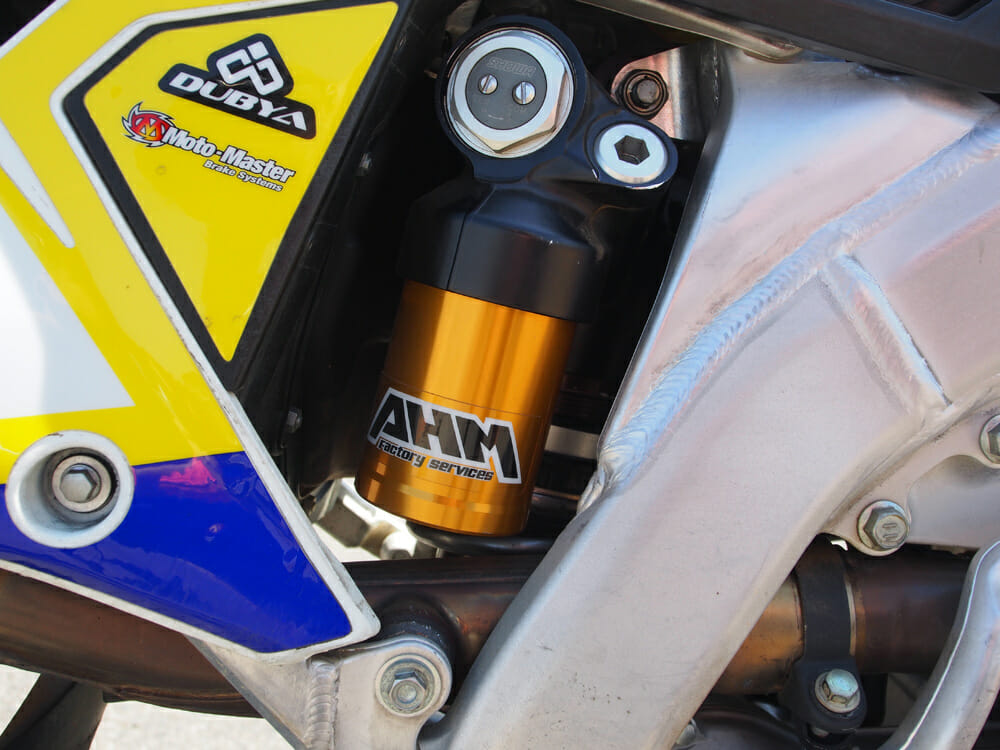
“We conducted a standard re-valve to set up the bike for supermoto,” says Brandon. “The stock ’18 RM-Z suffers big time with a lot of front and rear pitch, so this was something we wanted to dial out, as on a supermoto track you have more time with the fork fully compressed from high speed than the quick compression and rebound you experience in motocross.”

“The rear end in stock trim wallows under acceleration, rebounds quickly and puts a lot of weight back on the front of the bike which makes the fork dive,” Petersen explains. “To help with this, we utilized a more of a supercross/arenacross-style of setup. The spring rate was bumped up in the forks only, as the shock sprung was proper for rider weight of 192 pounds with no riding gear. The idea was to have the added fork-spring rate to assist in fork hold-up under braking and to keep more pressure on the rear of the bike, helping it turn.”
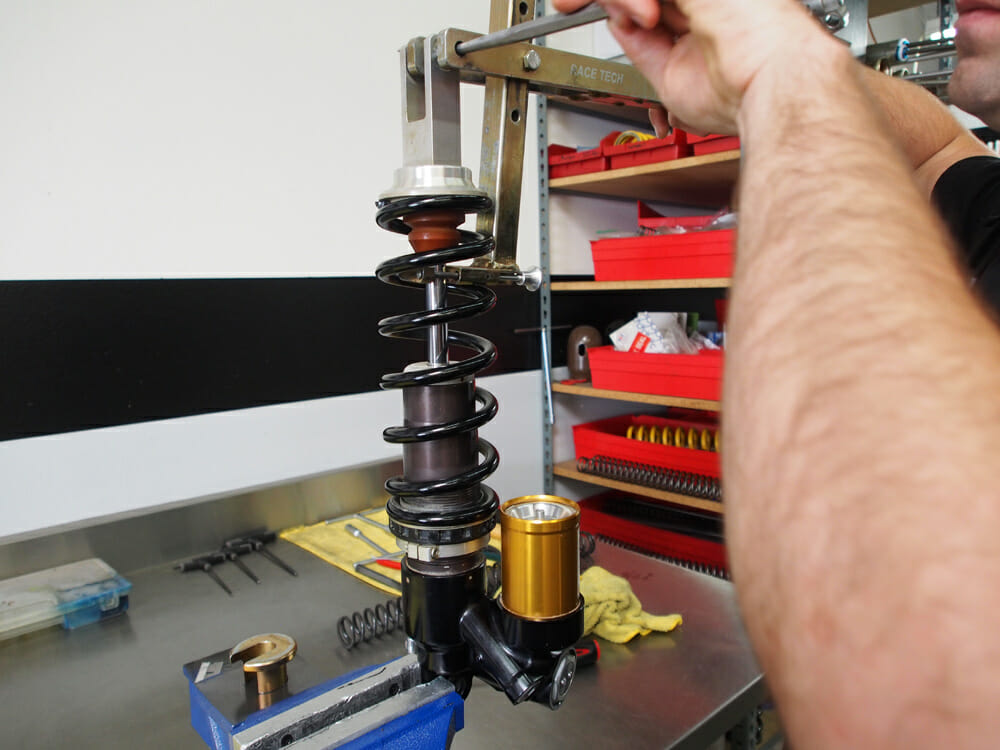
“The Suzuki’s BFRC shock tends to rebound very quickly and hurt the front-end feel, as it transfers to much weight to the front end. As such, compression damping was stiffened up, as was rebound damping to slow the shock down and to help with rear-end traction, get better drive and induce less pitching front to back. We also utilized a JGR lower adjustable pull rod thanks to John Basher.”
“Other than that, no special parts were needed for this build, as it was just a standard re-valve. All in all, it was a pretty simple setting change and very cost effective, allowing the user to still have a versatile bike.”
Off to the Races
So, does it all work? In short, yes. Riding a standard motocross bike with supermoto wheels and tires is a like riding a very fast see-saw, as the thing pitches like mad on the front and dumps all its weight on the rear when getting on the gas.
One quick session at Adams with the re-valved Suzuki, and it felt like a new bike, so the only thing left to do now was go racing on the thing.
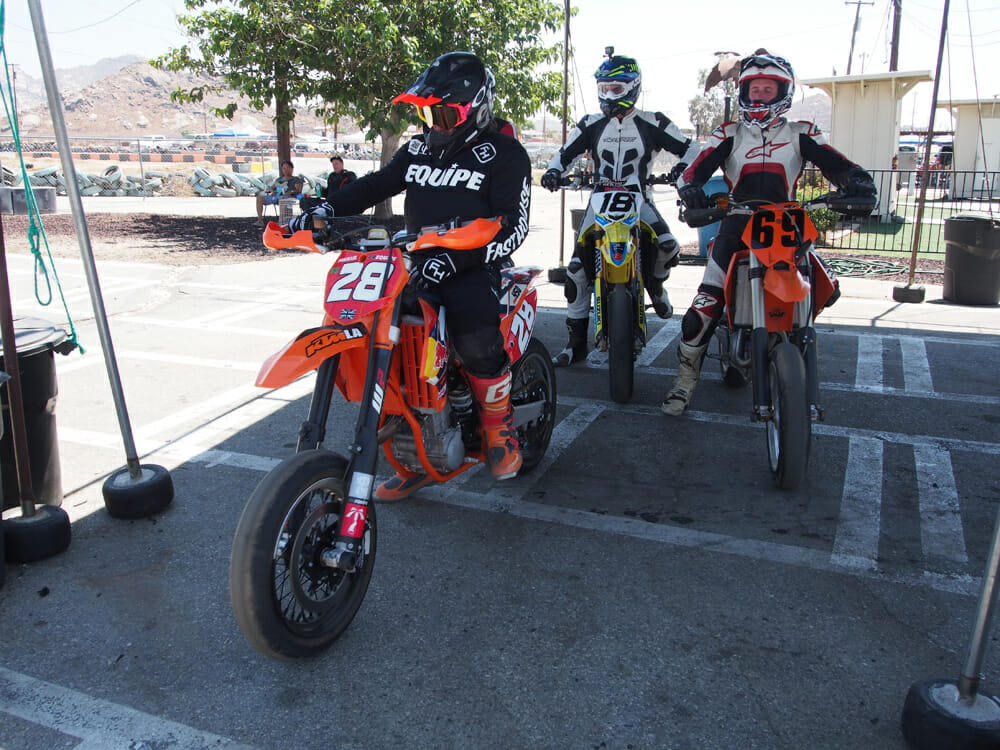
We headed out to round one of the 2018 WAR (West American Racing) Supermoto series, held at Apex Kart Track at Perris. This was the first time I’d ever raced supermoto and, even though the field wasn’t what you’d call packed, there were still about five riders capable of turning in super-fast laps on proper supermoto builds, rather than a half/half setup like our RM-Z.
In what was about 105-degrees, we went out for practice and I immediately felt good on the bike. I ride in a road race-style simply because that’s what I feel most comfortable in, although the next corner or two after the dirt section I always go back to moto-style just to scrub the dirt off the tires before getting my knee out.
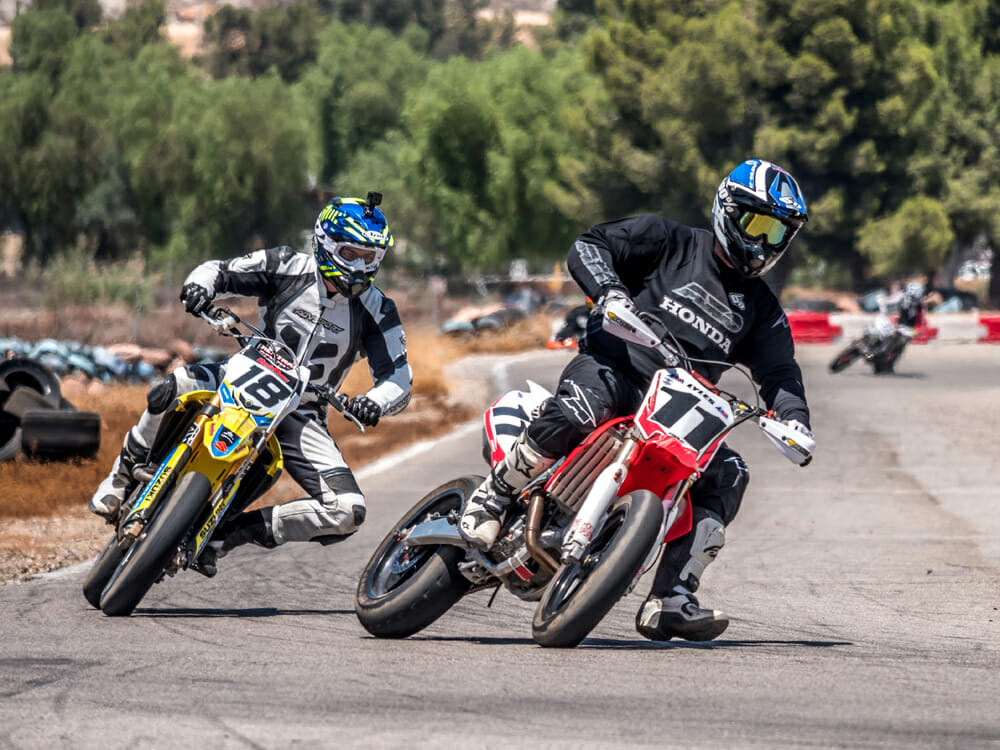
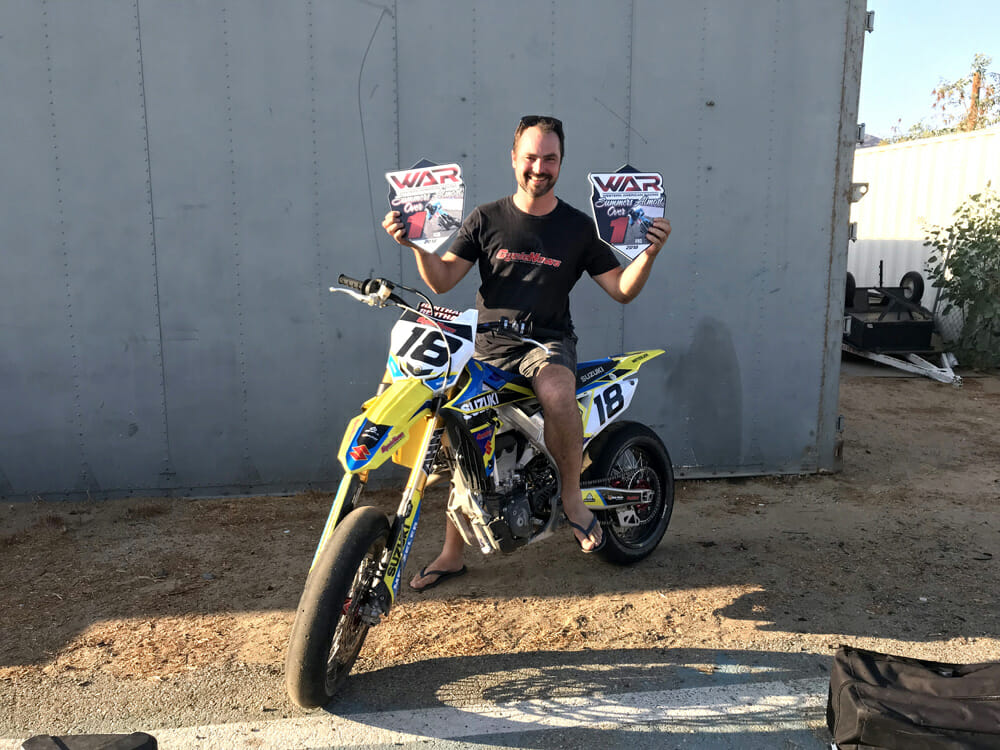
The days worked out rather well, I must say. We managed to win all four Pro races and go home with a handy $280 prize money, although I was struggling so much with fatigue that in the final race while leading into turn two of lap one, I out-braked myself, slammed through the barriers and was dumped back to last place—thankfully without crashing.
That at least gave me a few people to chase, and I finally got the lead back with two laps to go, rolling over the line back to the pits and quietly dying of heat exhaustion.
The best thing about the weekend was just how nice the Suzuki was to race. The changes made the bike a little harder to handle in the dirt, as it didn’t soak up the bumps like a standard RM-Z would, but at speed it was a totally different bike, much more composed under braking and allowing you to get real nasty on the throttle with that awesome Metzeler just hooking up and driving.
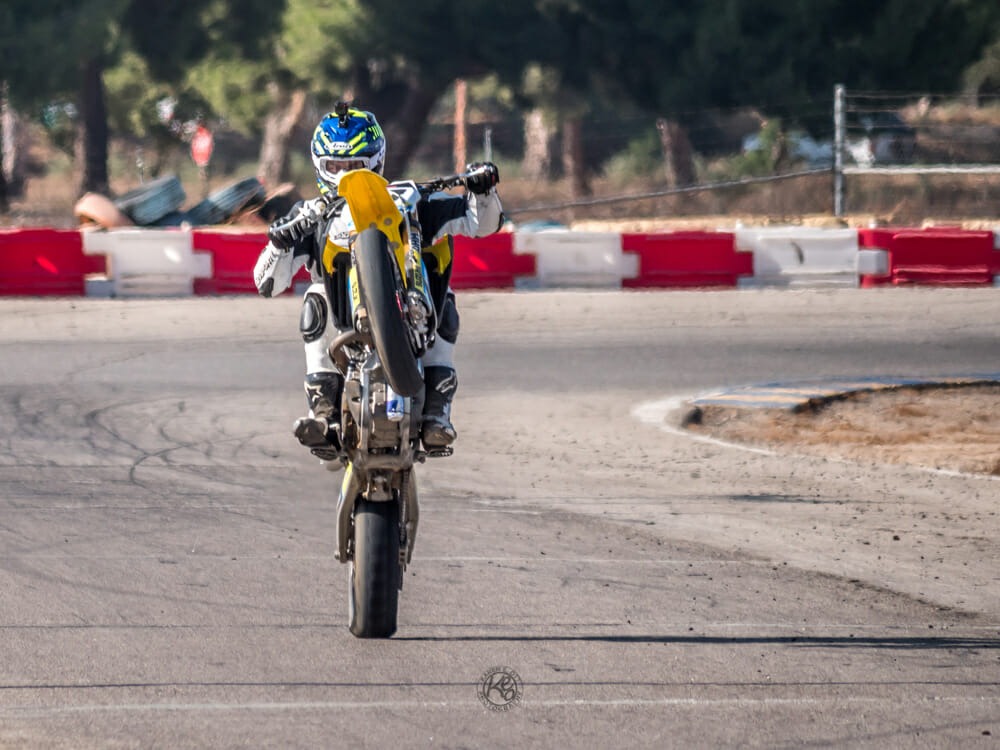
It’s unfortunately time to give our yellow-and-blue baby back to its rightful owners, but I’ve had a blast with this project. Thanks to AHM, Dubya, Metzeler, JGR and Motomaster for chipping in to make this a reality. CN
Click here to read this in the Cycle News Digital Edition Magazine.
Click here for the latest Cycle News Motocross bike reviews and news.
Click here for more Suzuki motorcycle reviews and news.